“Timeless” is a word used frequently in architecture.
Often, it’s associated with a particular aesthetic—something restrained, neutral, or familiar.
But timelessness isn’t really about style.
It’s about whether a building continues to work well over time.
Natural light that enhances the experience of a space throughout the day.
Spaces that are carefully proportioned, not simply styled.
Materials that age with dignity rather than requiring constant replacement.
Plans that can adapt as life changes.
These qualities aren’t always immediately noticeable. But they shape how a home is experienced every day—and how well it endures over time.
Trends tend to prioritise what feels new.
Timelessness prioritises what continues to feel relevant.
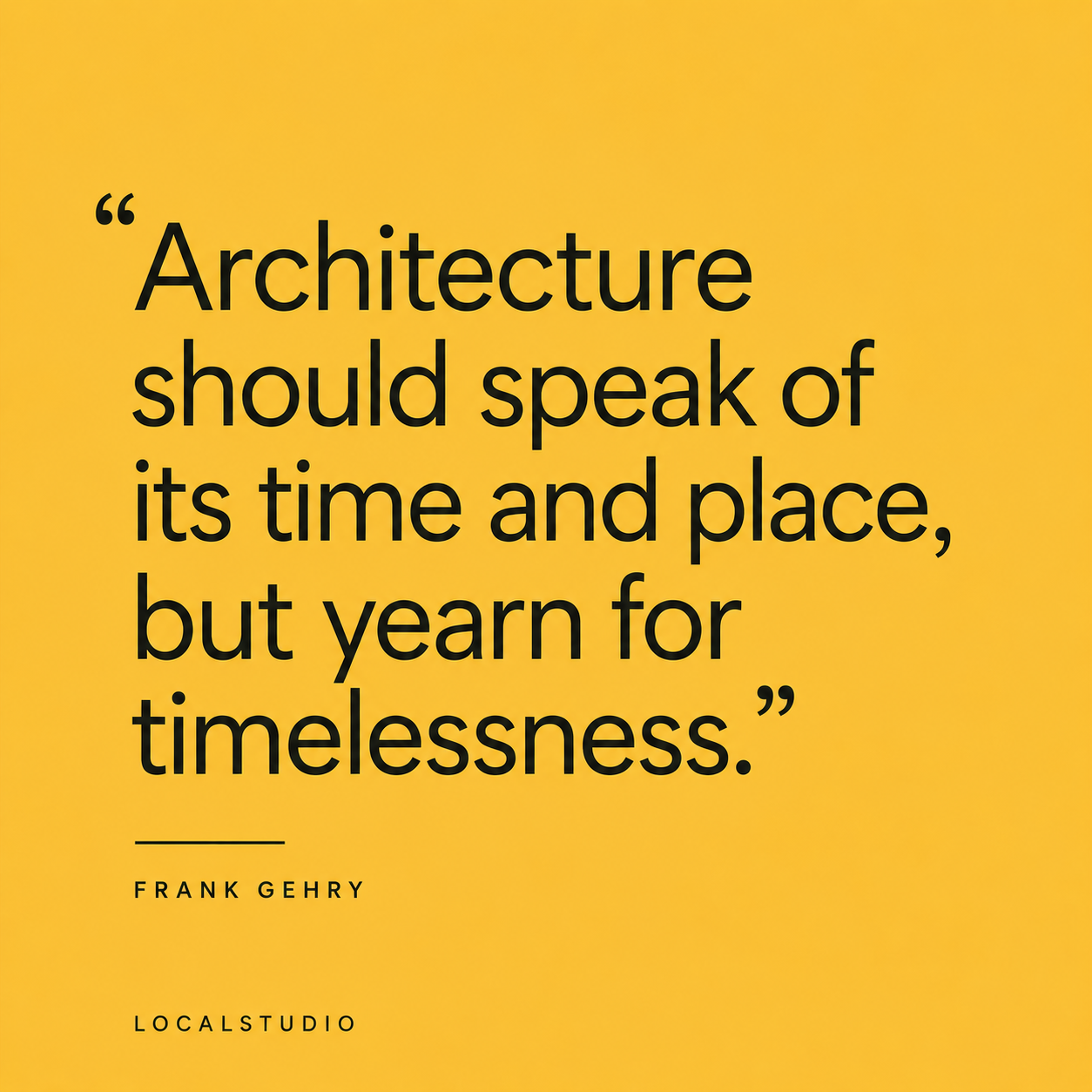
As Frank Gehry once said:
“Architecture should speak of its time and place, but yearn for timelessness.”
That idea feels increasingly important now, when so much of the built environment is shaped by short-term trends and rapid consumption.
In that sense, timelessness is less about making a statement, and more about creating something thoughtful enough to remain meaningful long after the moment it was designed.