• Home
    • About
    • Methodology
  • Selected Projects
  • Journal
  • CONTACT
Menu

LOCALSTUDIO

THINK GLOBAL, ACT LOCAL
  • Home
  • STUDIO
    • About
    • Methodology
  • Selected Projects
  • Journal
  • CONTACT

Stanmore Alterations: Evolving a Compact Family Home

December 2, 2025

Every project begins with a conversation, and in Stanmore it started around the kitchen table — a family reflecting on how they live now, and how they hope to live in the years ahead. Their semi-detached home had charm and solidity, but it was working hard to support the day-to-day routines of a professional couple, a young daughter, and extended family who often stay. The brief was clear: the house needed to adapt, but without losing its modesty or over-capitalising on an inner-west site where every square metre counts.

The design response focuses on doing more with what already exists. On the ground floor, walls that once divided the home into tight compartments have been reworked to create a single, open kitchen and dining space that gathers light from the north and spills out to the backyard. This shift alone transforms how the house feels — calmer, more connected, and far more usable for a growing family.

Smaller but meaningful adjustments accompany this big move: a compact laundry tucked efficiently into the plan, bathrooms rethought for comfort and longevity, and the upper dormer window reshaped to draw in daylight and replace a problematic balcony that had been a continual source of frustration.

Throughout, the emphasis has been on retaining the character of the original dwelling. Materials are reused where possible, and new elements are introduced with restraint, ensuring the old and new sit comfortably together.

As construction progresses, the building’s bones are revealing the intentions behind the design. Watching the structure take shape — moving from drawings and approvals to actual form — is always one of the most rewarding stages of a project.

Comment

Designing for Energy Independence: Installing Solar and Battery Storage at Home

November 6, 2025

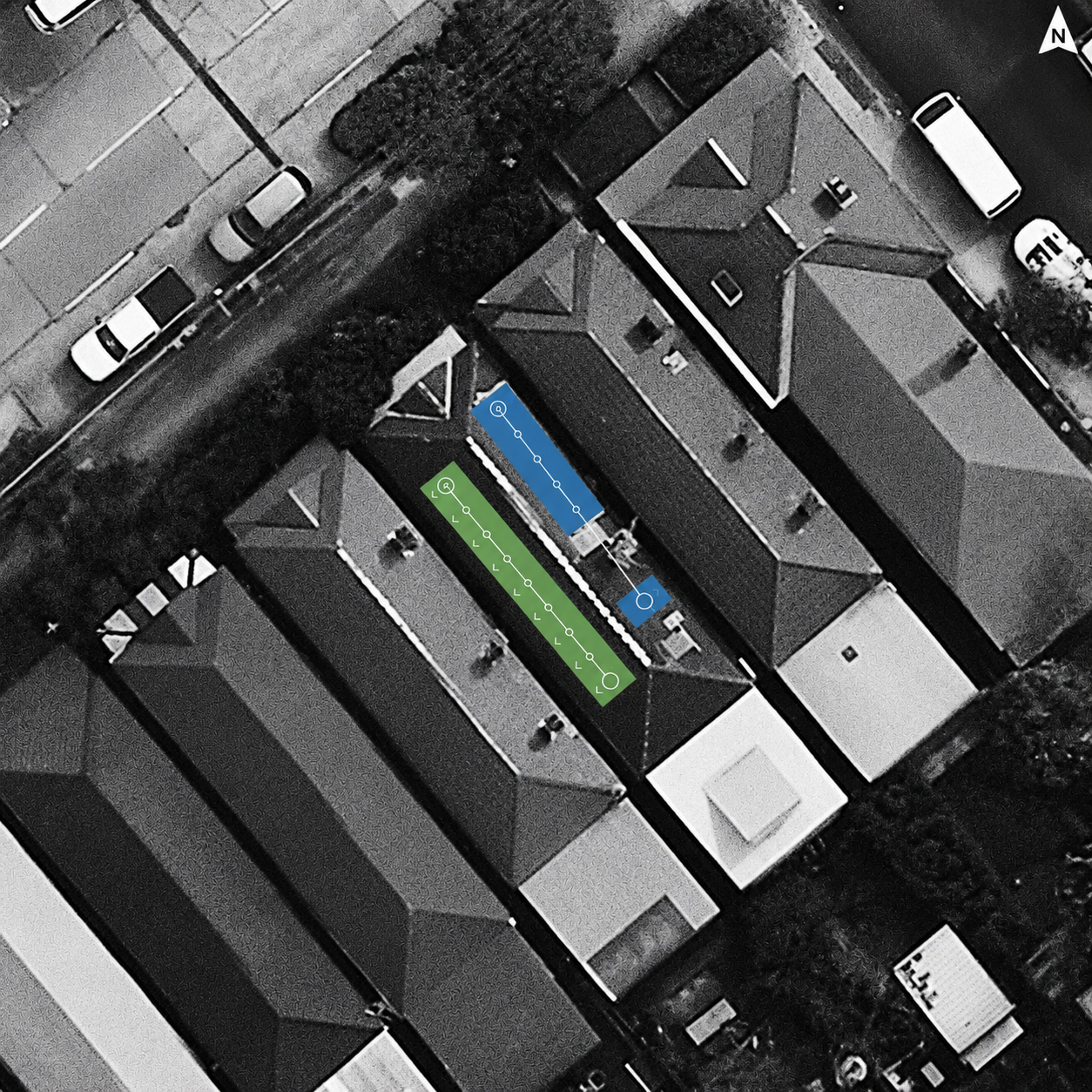
In October 2025, I installed a 7.125kW solar system with a 13.34kWh battery at my home in St Peters. It’s a modest suburban house, typical of Sydney’s Inner West — and like many, it faces the challenge of balancing comfort, energy use, and sustainability in a compact footprint.

After comparing several options, I chose Partners in Energy to design and install a system built around Jinko Solar Tiger Neo panels and an Alpha ESS Smile inverter with integrated 13.34kWh battery storage. The system is expected to generate approximately 9,200kWh of electricity per year, enough to offset the majority of household consumption.

Performance and Payback
The installation is projected to reduce grid electricity use by over 80%, bringing average monthly bills down from $122 to about $21. Over twenty years, the system offers a net present value of $16,500, a 158% return on investment, and an internal rate of return of 12.4%. The payback period sits at around eight to nine years, after which it will continue producing free, renewable energy.

Environmental Impact
Each year, the system will avoid approximately 2,766 litres of petrol in equivalent emissions, or about 3.1 tonnes of coal burned — the same as planting 167 trees annually. While these numbers are abstract, they translate into tangible environmental benefits at a household scale.

Reflections
For architects and homeowners alike, the shift to distributed energy isn’t just about technology — it’s about design thinking. Integrating solar and storage requires an understanding of orientation, roof geometry, and daily energy patterns, all of which are familiar considerations in architecture.

Incorporating renewable systems into existing housing stock is one of the most direct ways we can reduce emissions and improve resilience. This installation is a small but meaningful step in aligning the way I live with the values I try to bring to my work.

Comment

© Copyright LOCALSTUDIO 2025