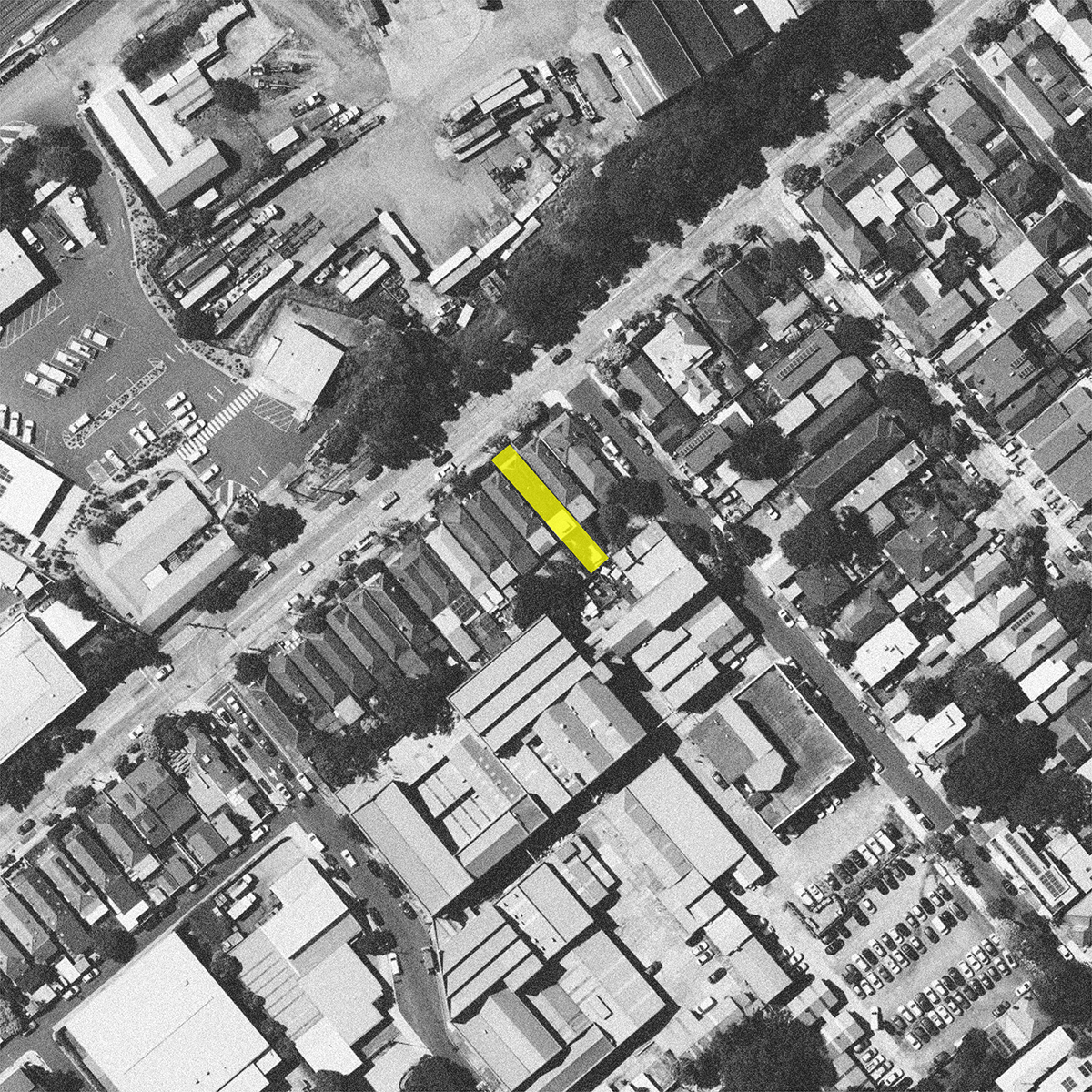
St Peters, NSW
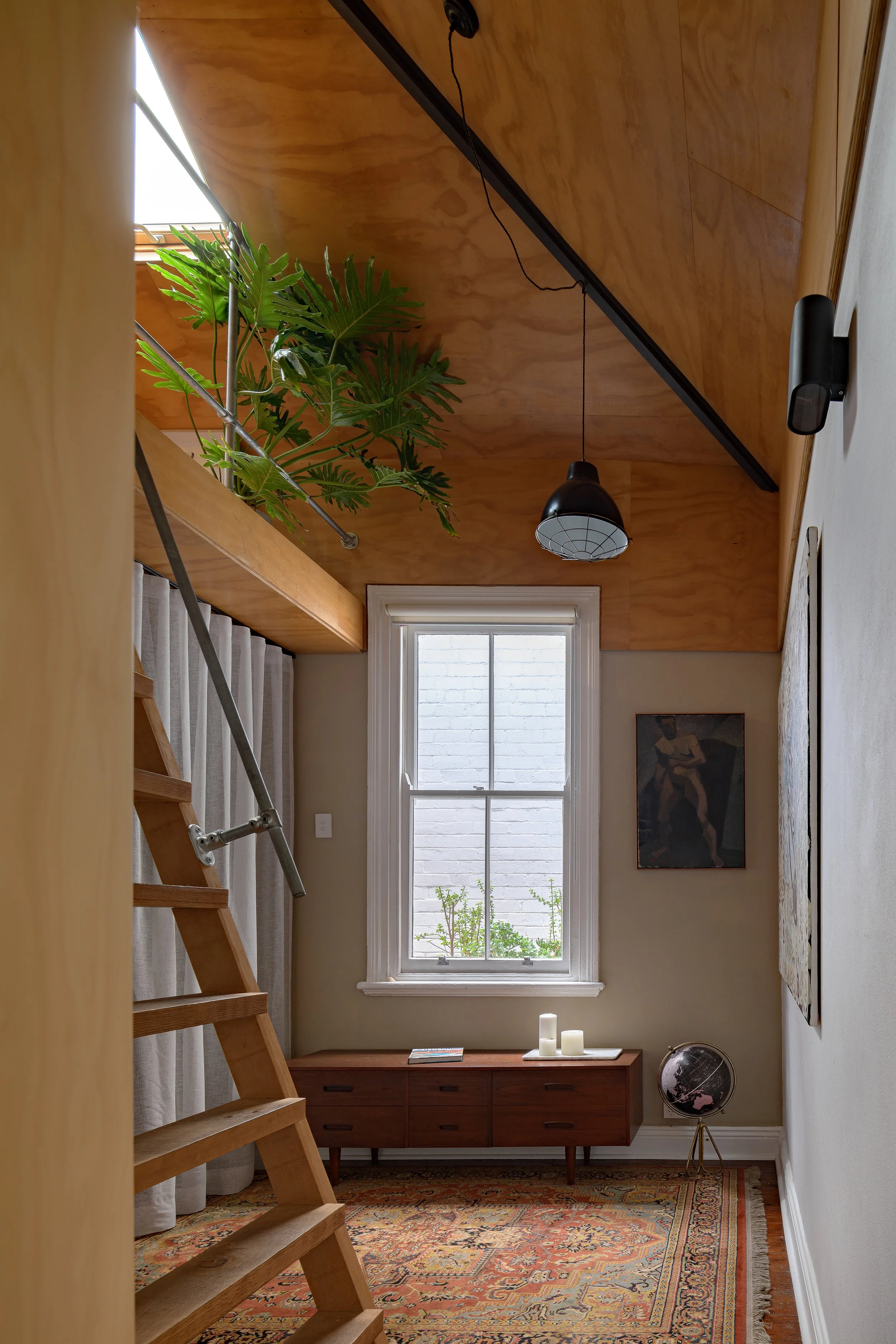
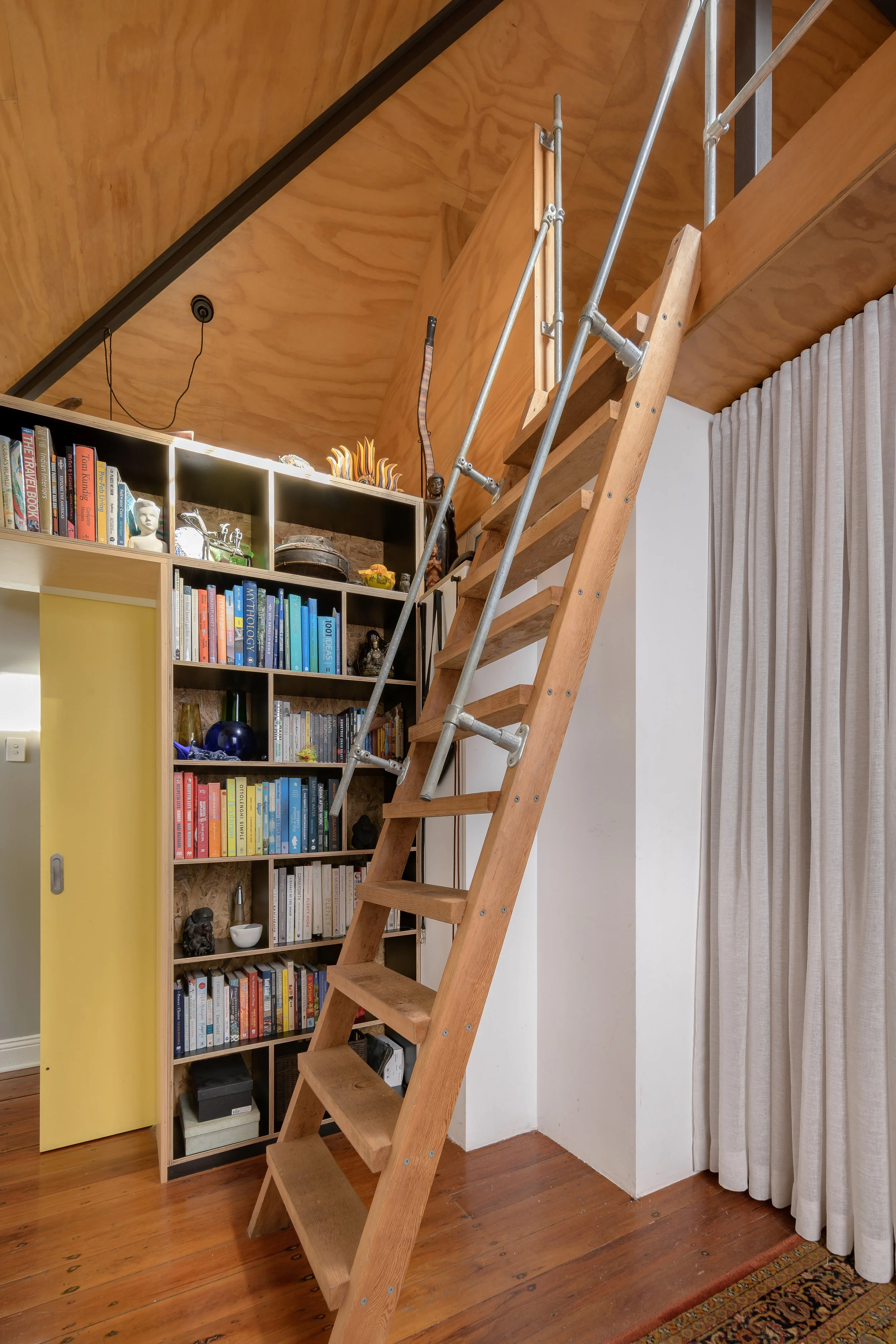
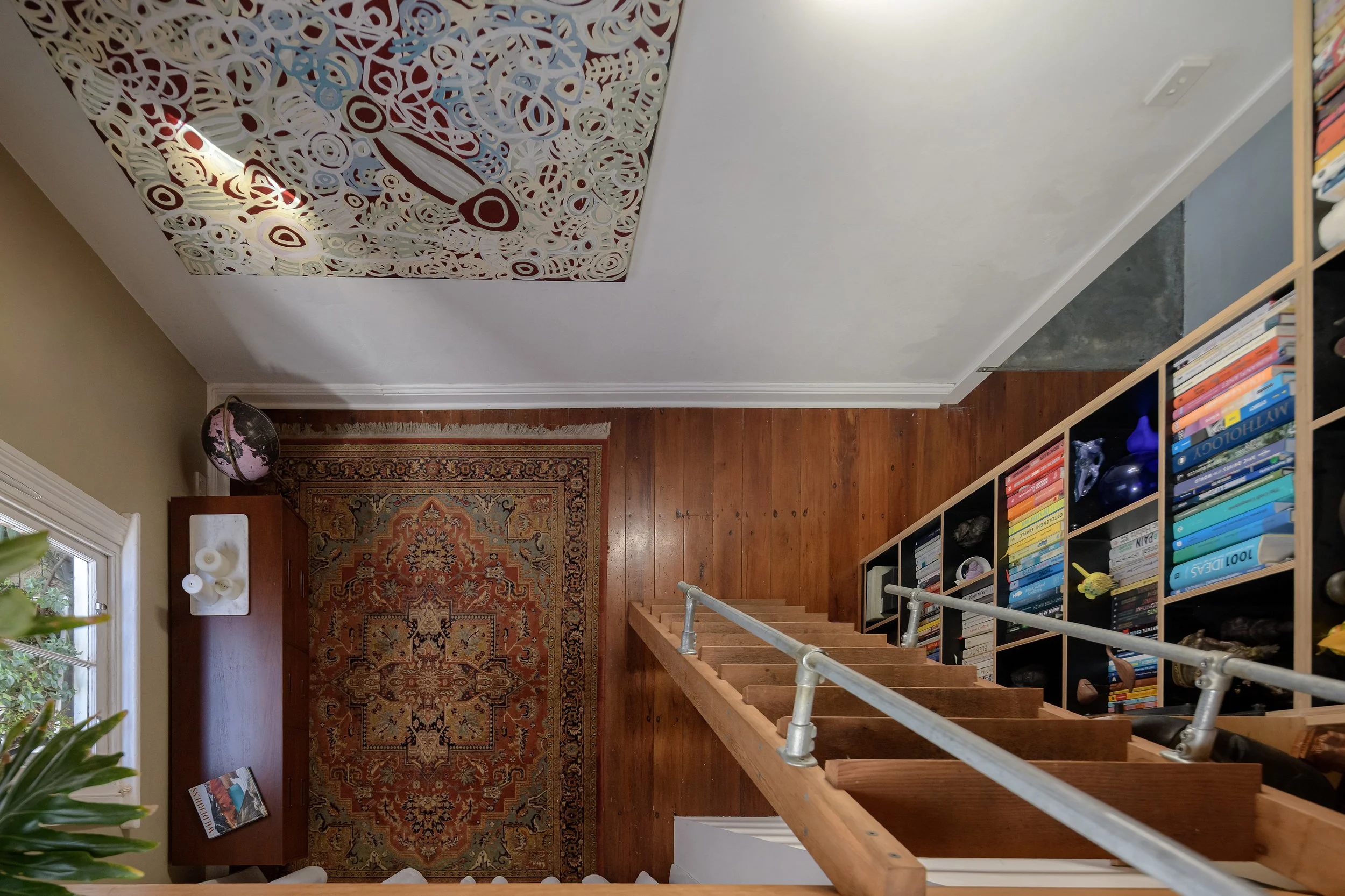
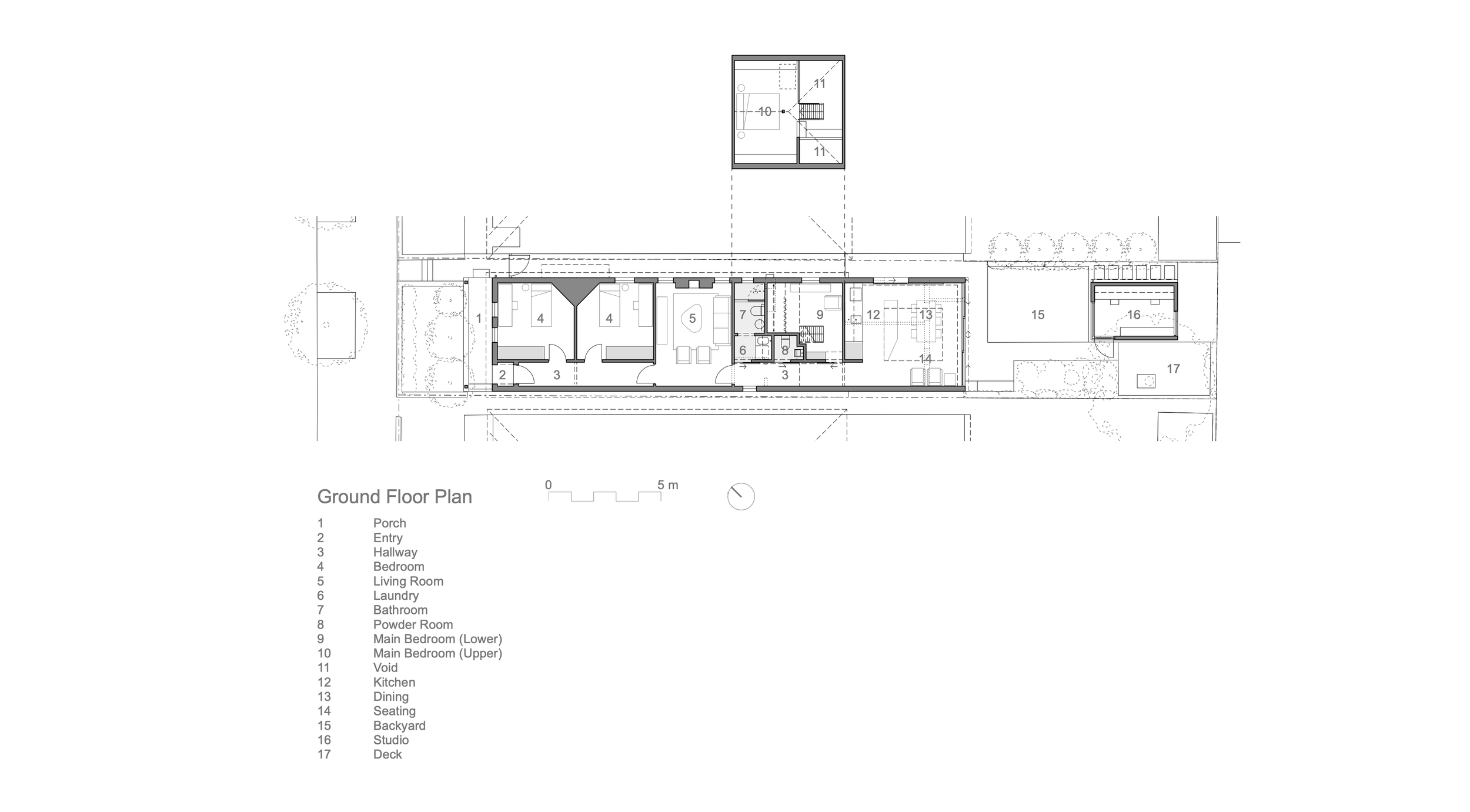
Completed in 2018, this renovation reimagines a compact inner-city home for a growing family, demonstrating how thoughtful, modest interventions can transform the way an existing house is lived in. Having been home to the family for more than fifteen years, the project reflects an evolving way of living — adapting to changing needs rather than moving elsewhere. As the children grew and separate bedrooms became essential, the existing home was carefully reworked to provide greater flexibility, light and connection while largely remaining within its original footprint.
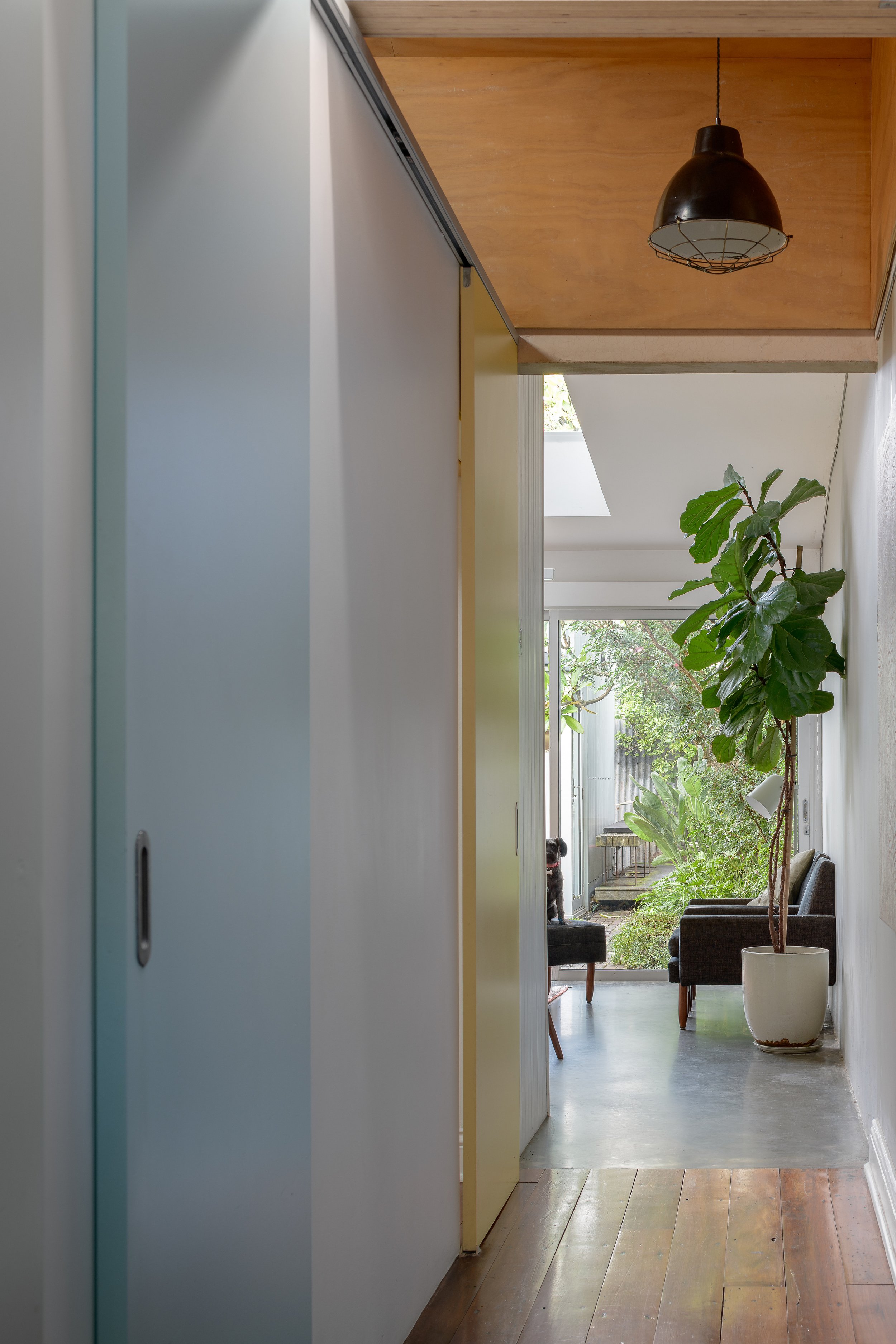
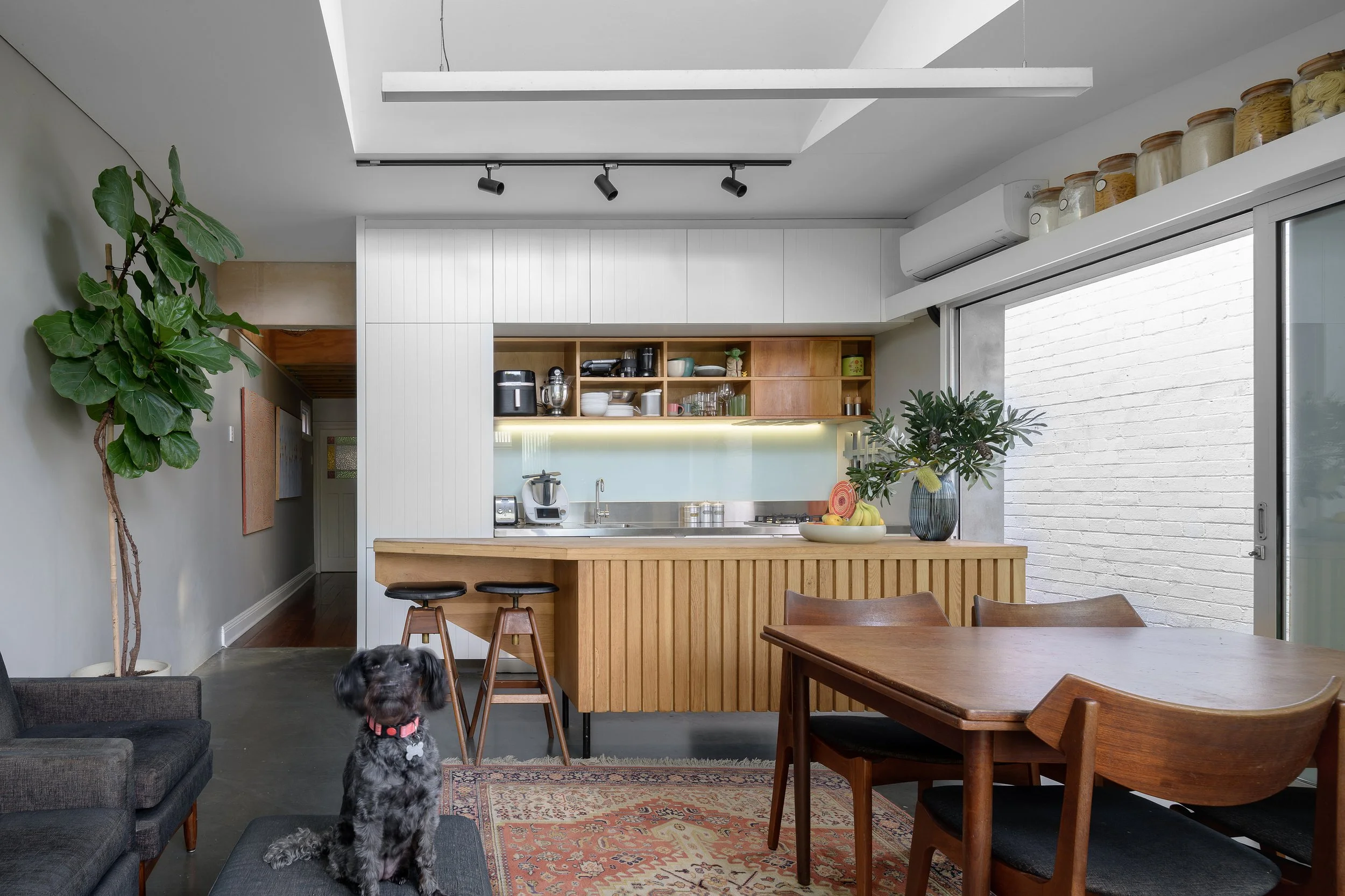
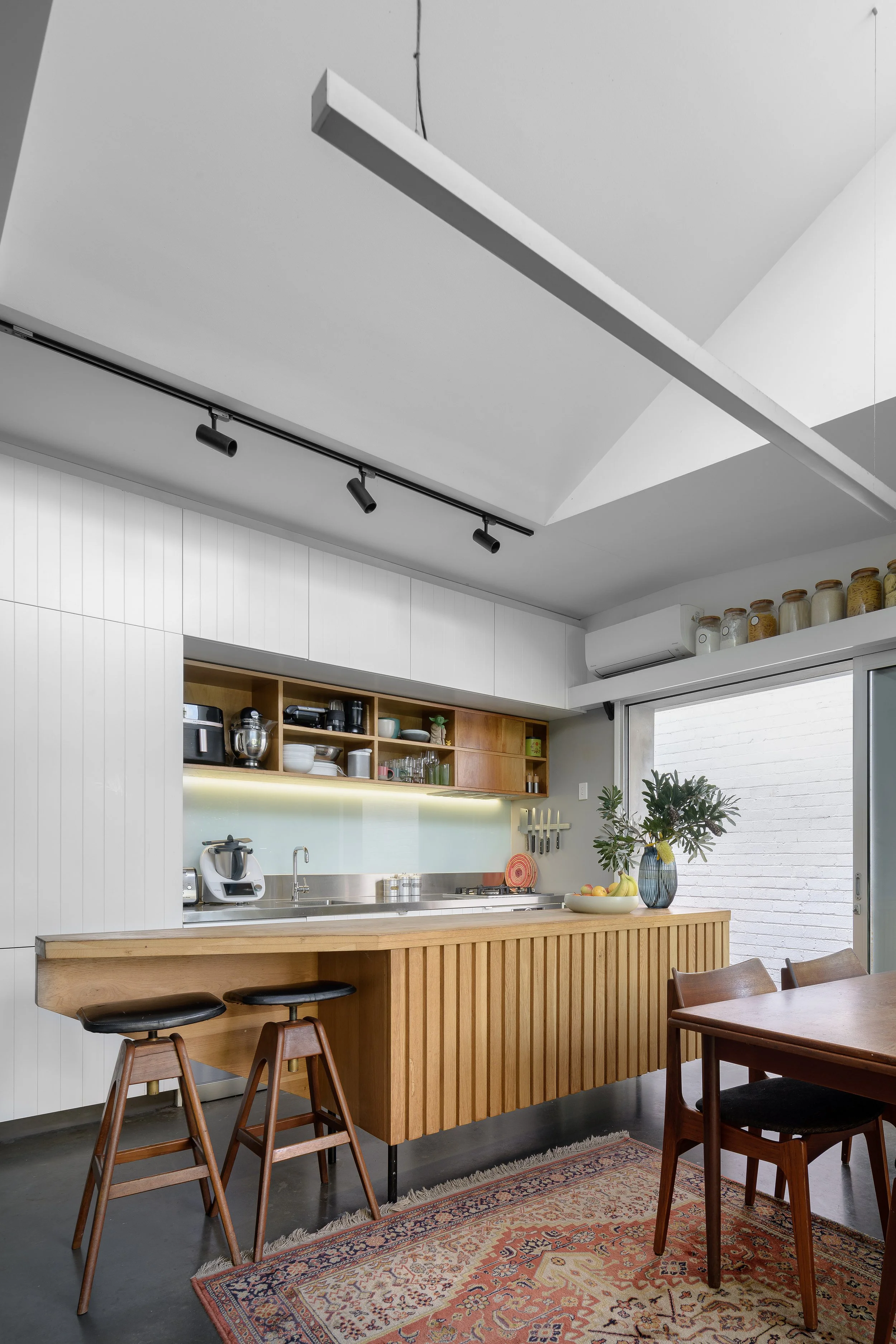
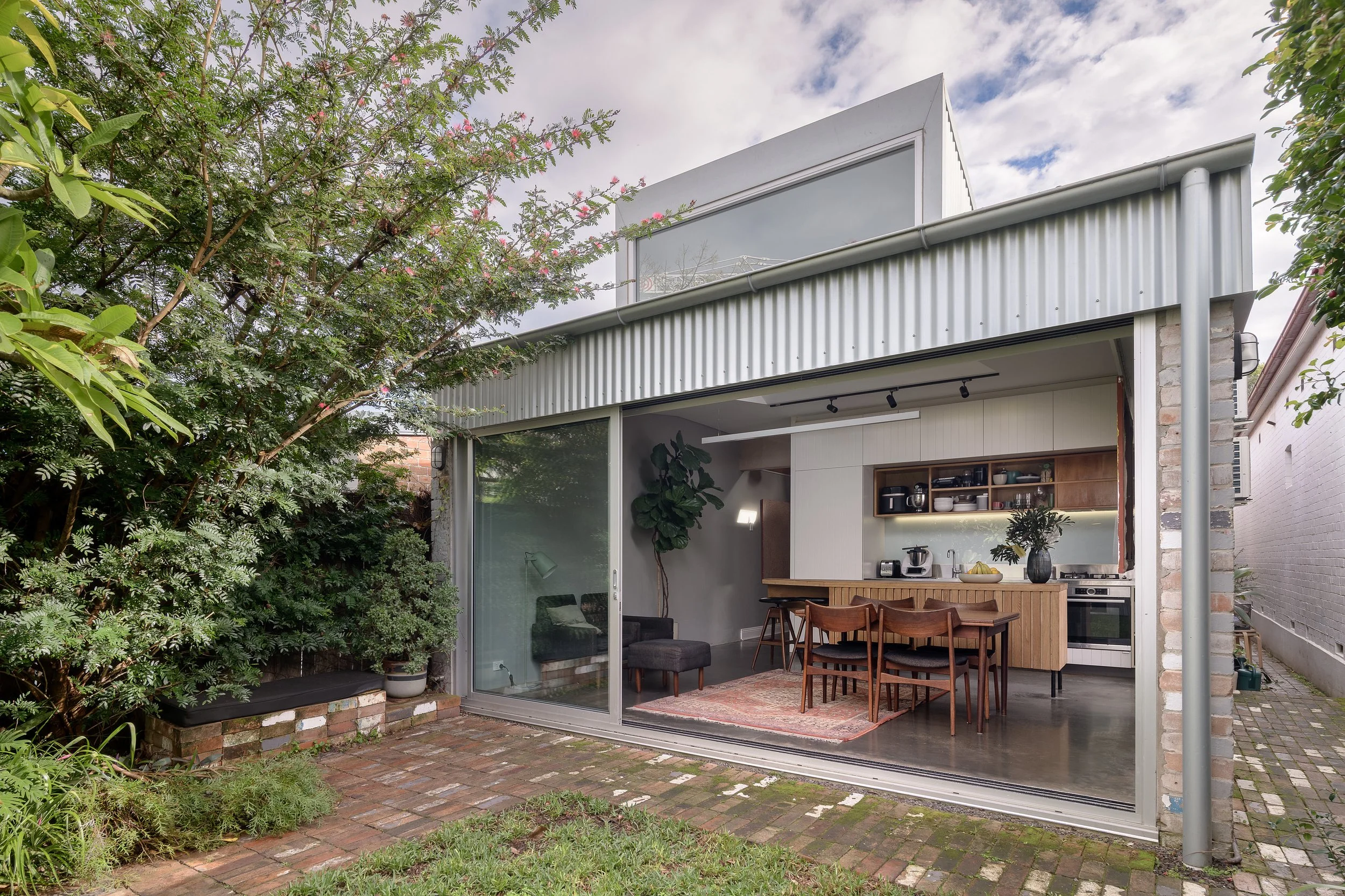
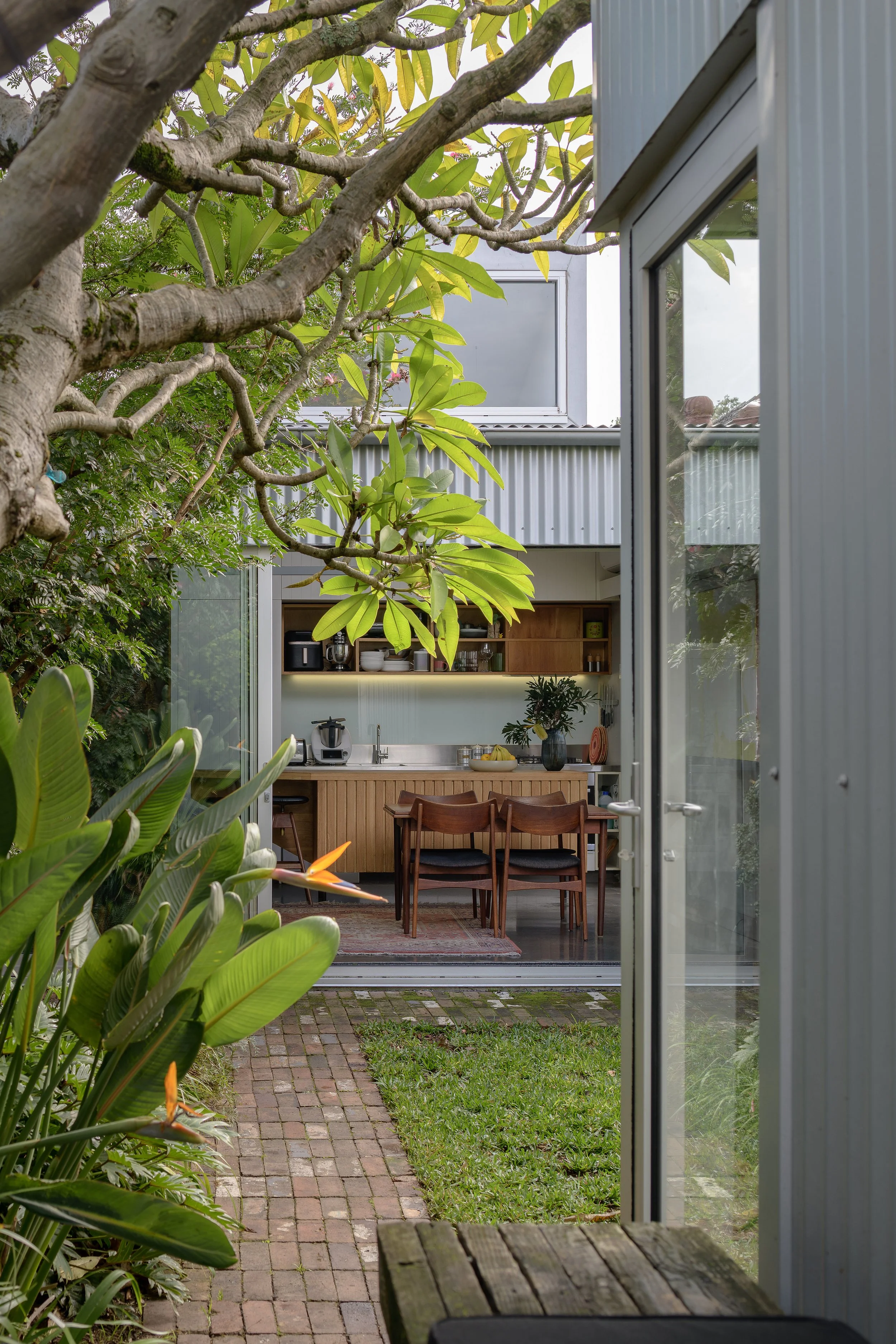
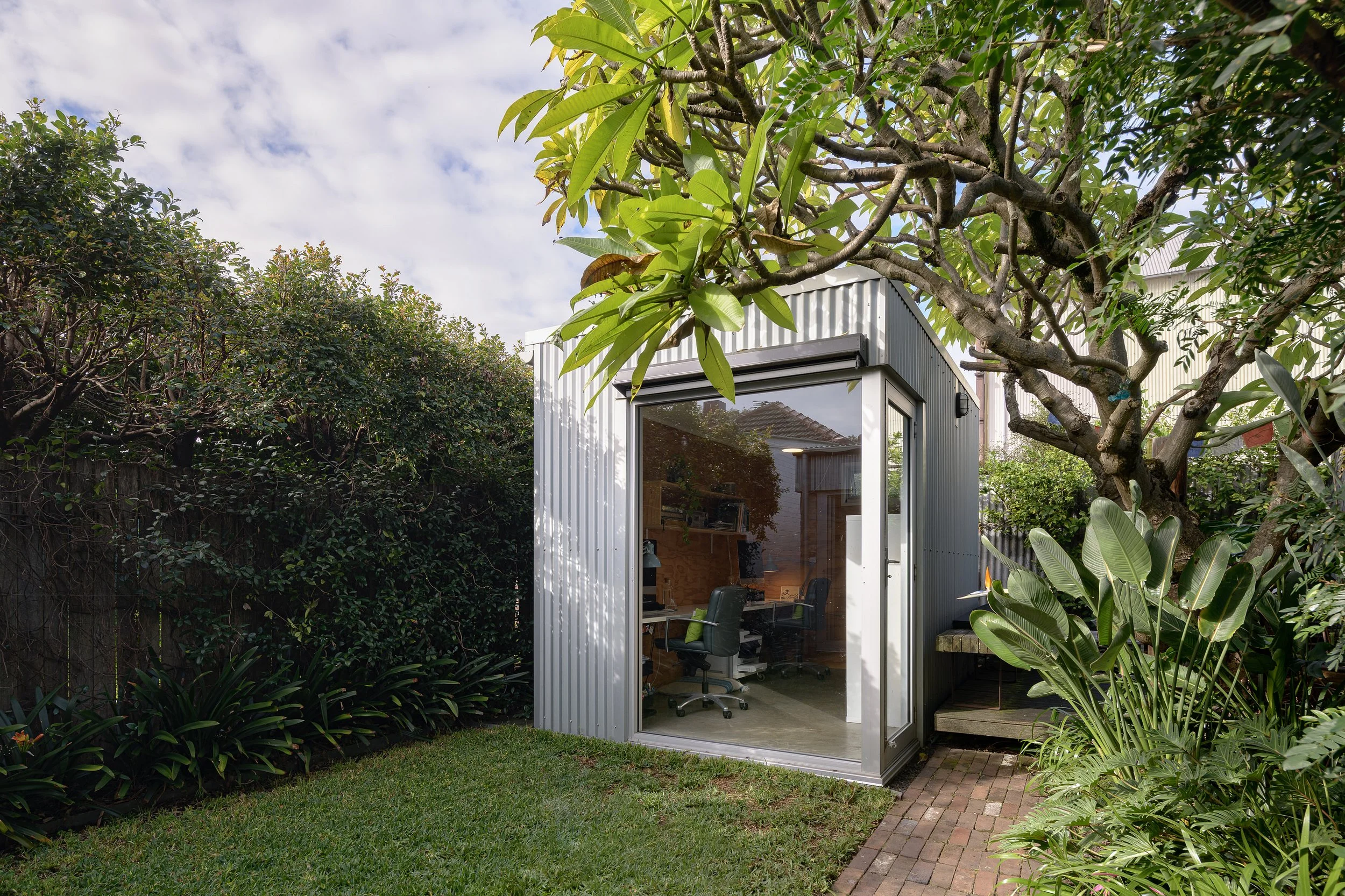
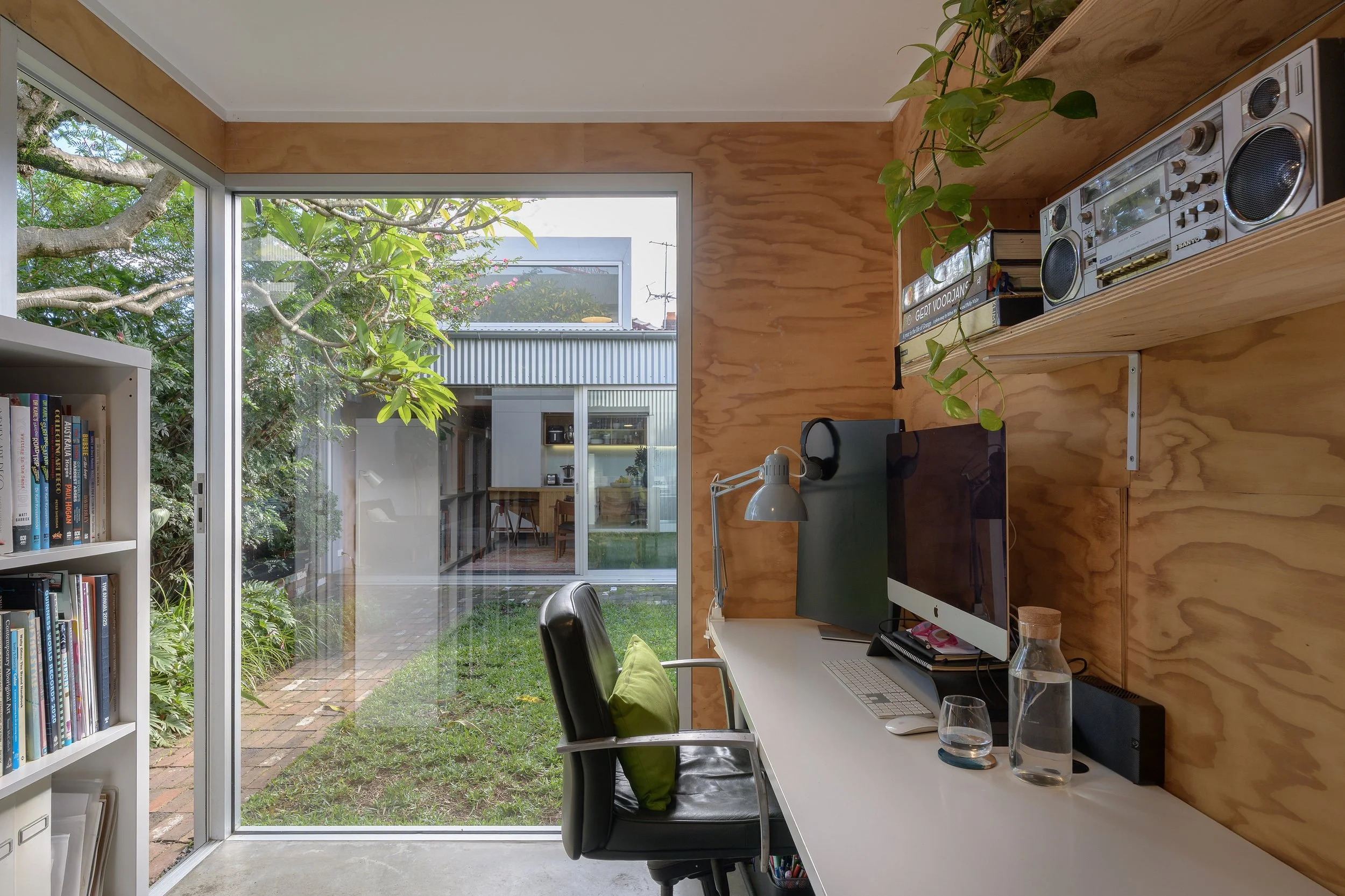
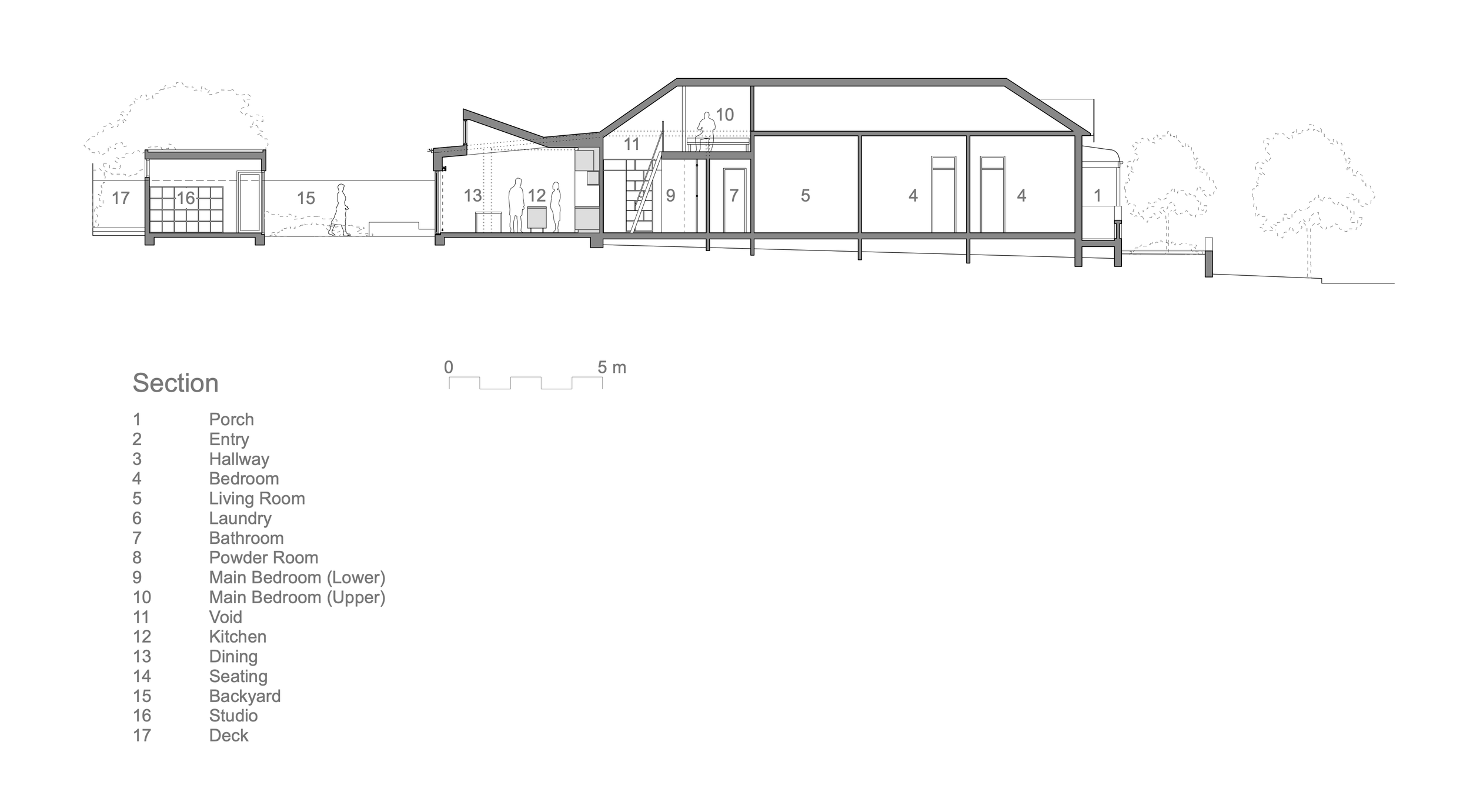
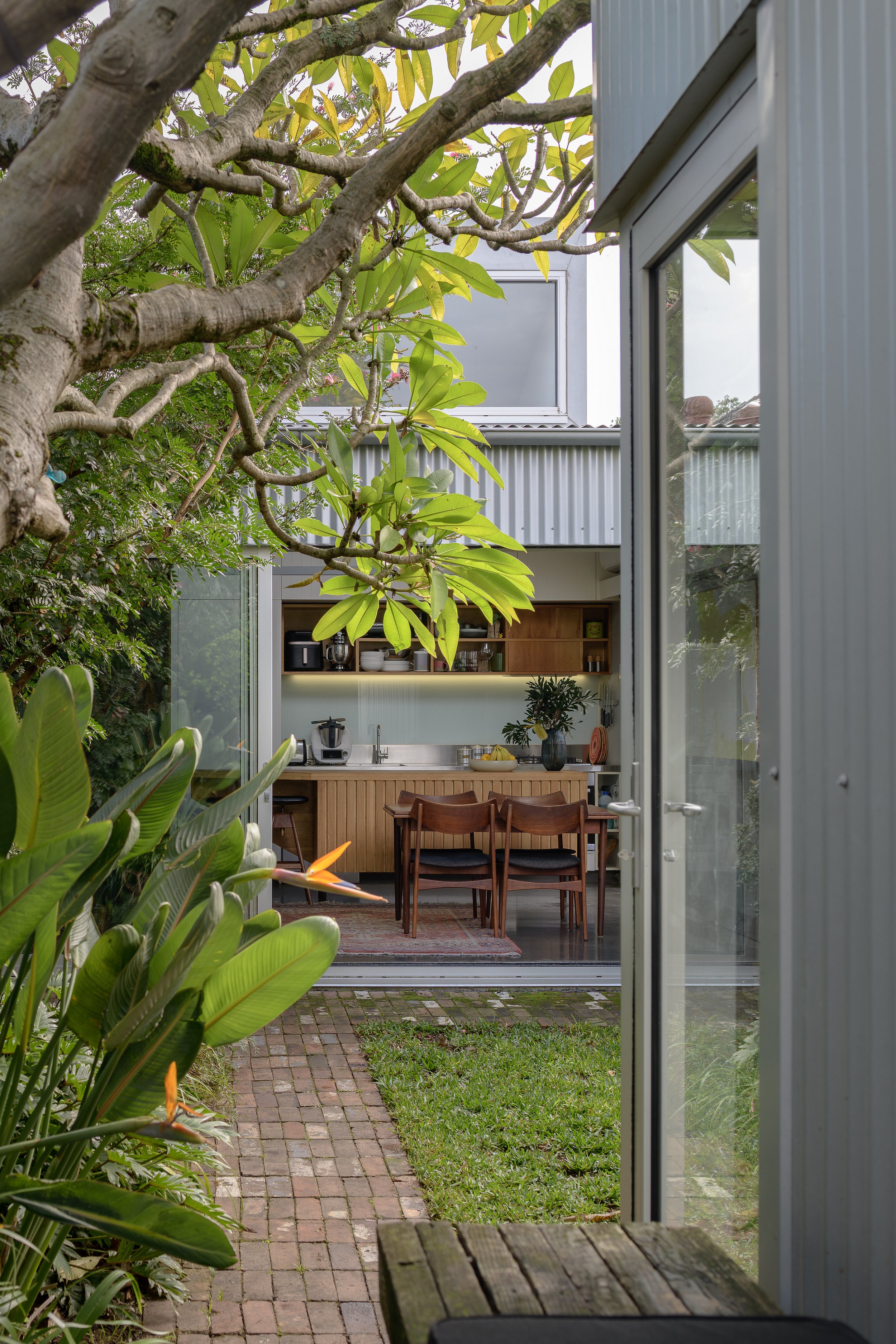
Only 20 square metres was added, including a compact backyard studio that now accommodates two creative practices. The new kitchen and dining space forms the heart of the home, opening to a sunlit courtyard that blurs the boundary between indoors and out. Despite its modest size, the house feels generous, with every space carefully considered to support family life, work and everyday routines.
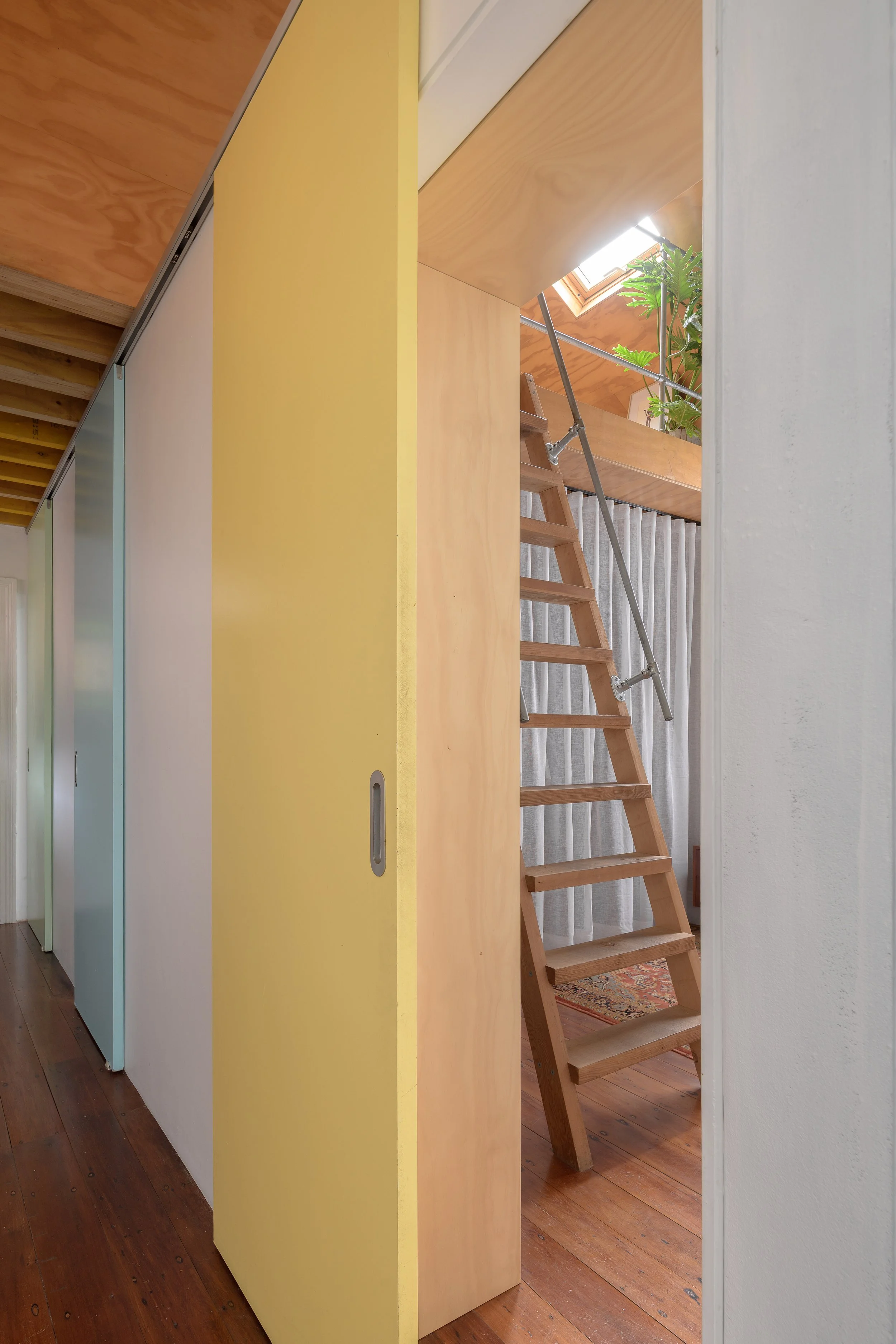
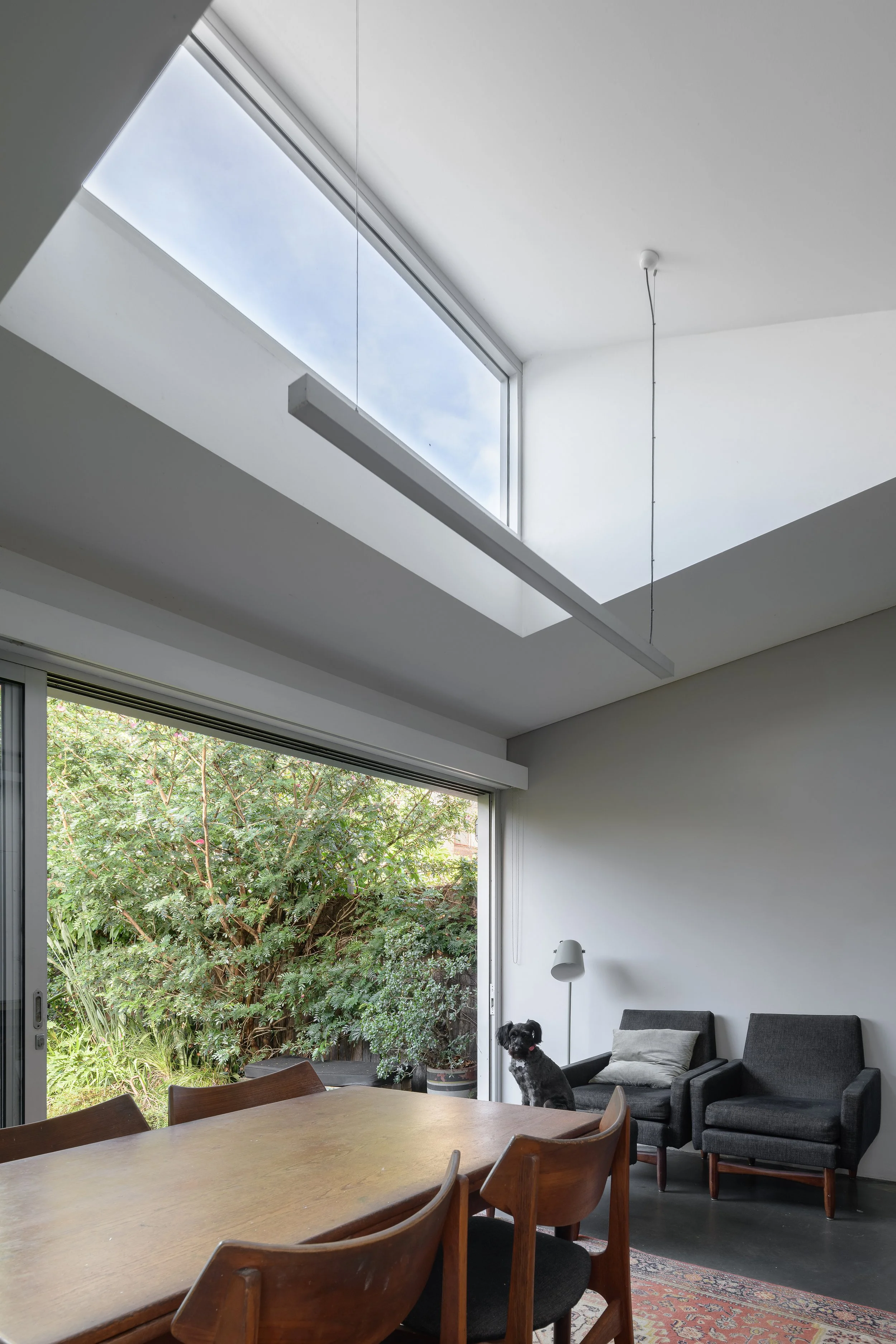
Natural light and passive performance were central to the design. A pop-up roof window draws morning sunlight deep into the kitchen, strategically placed openings bring soft, indirect light throughout the day, and the studio is oriented to capture the low winter sun. These simple interventions improve comfort year-round while reducing reliance on mechanical heating and cooling.
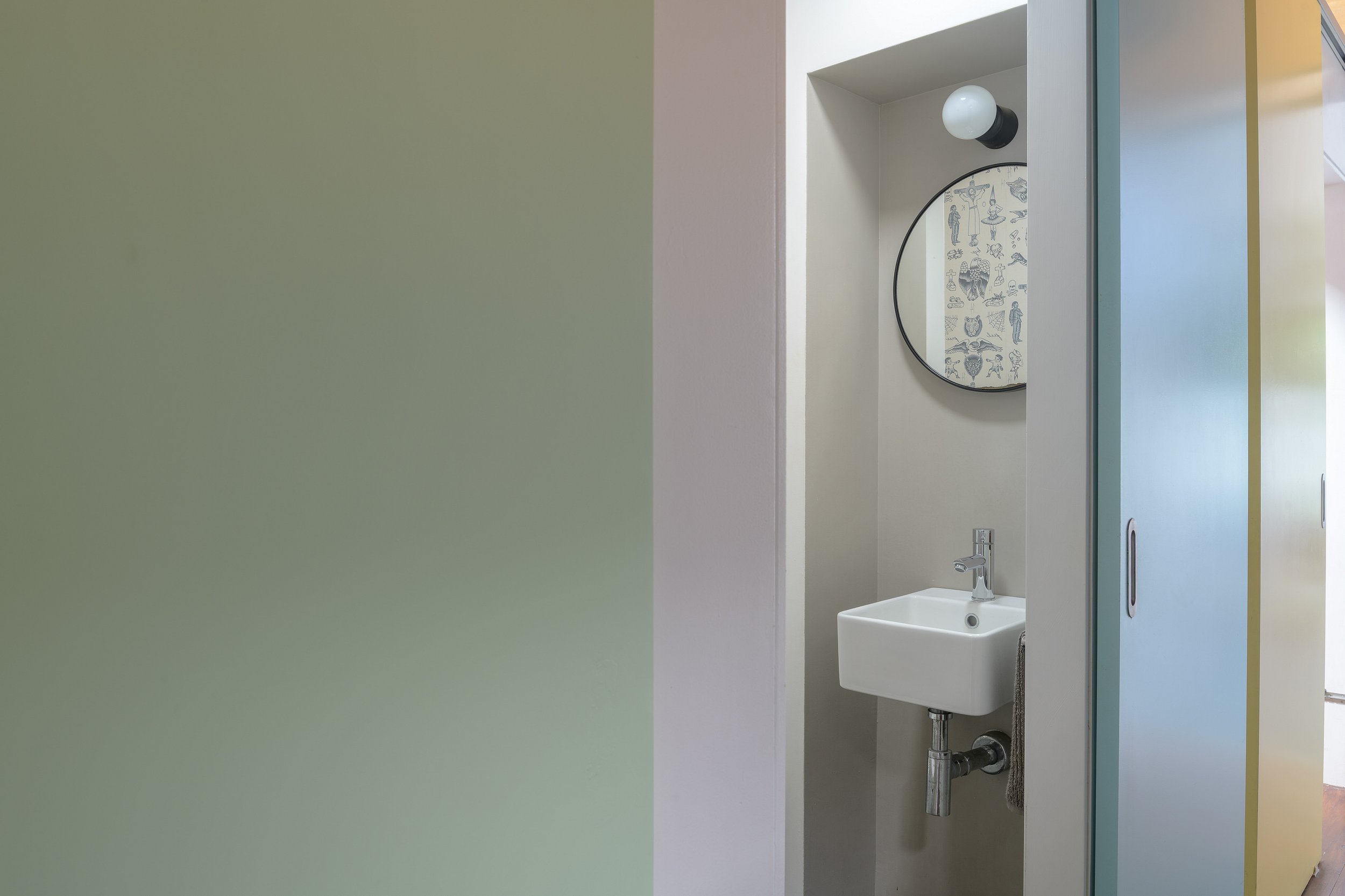
Working within a modest budget, the material palette is intentionally restrained. Timber framing, concrete floors, plywood linings, reclaimed brick and corrugated steel create a robust, honest backdrop for daily life, while high-performance acoustic glazing responds to the site's location beneath Sydney's flight path. The project demonstrates how careful planning and measured decisions can achieve richness through proportion, light and material rather than scale.
Like the family it was designed for, the house continues to evolve. Since completion, rooftop solar, battery storage and efficient electric heating and cooling have been introduced as part of an ongoing transition away from gas, alongside other incremental improvements that have enhanced the home's environmental performance. Rather than viewing sustainability as a fixed outcome, the project embraces it as a continual process of adaptation — showing how existing homes can become more comfortable, resilient and sustainable over time while retaining the character and memories that make them worth preserving.
Working within modest means, the design celebrates simplicity, material honesty, and careful use of space. Light, proportion, and connection guide every decision — making the most of the existing home and its urban setting.
Photography by The Guthrie Project.
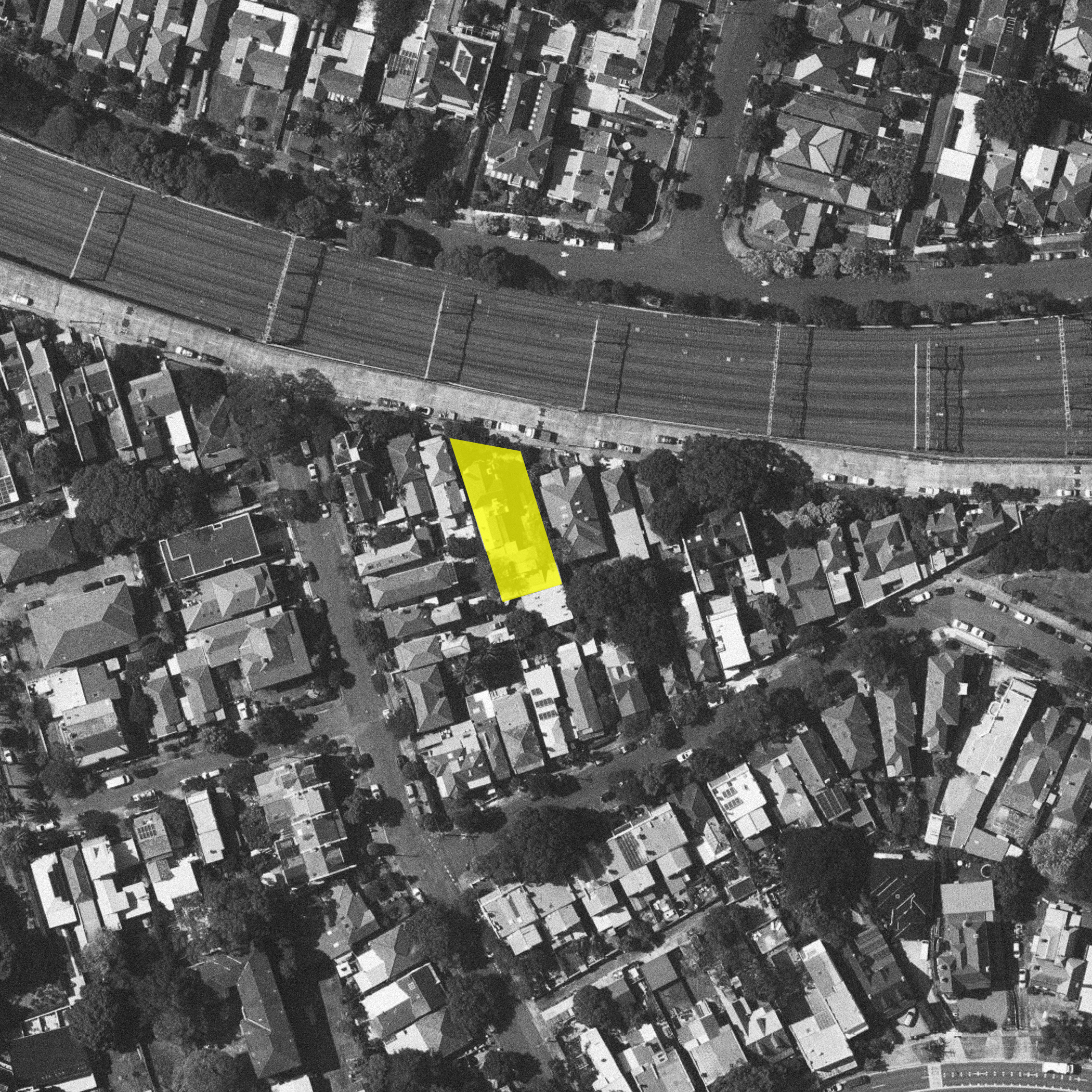
Stanmore, NSW
BTB Architecture Studio Project — Jason Border, Director
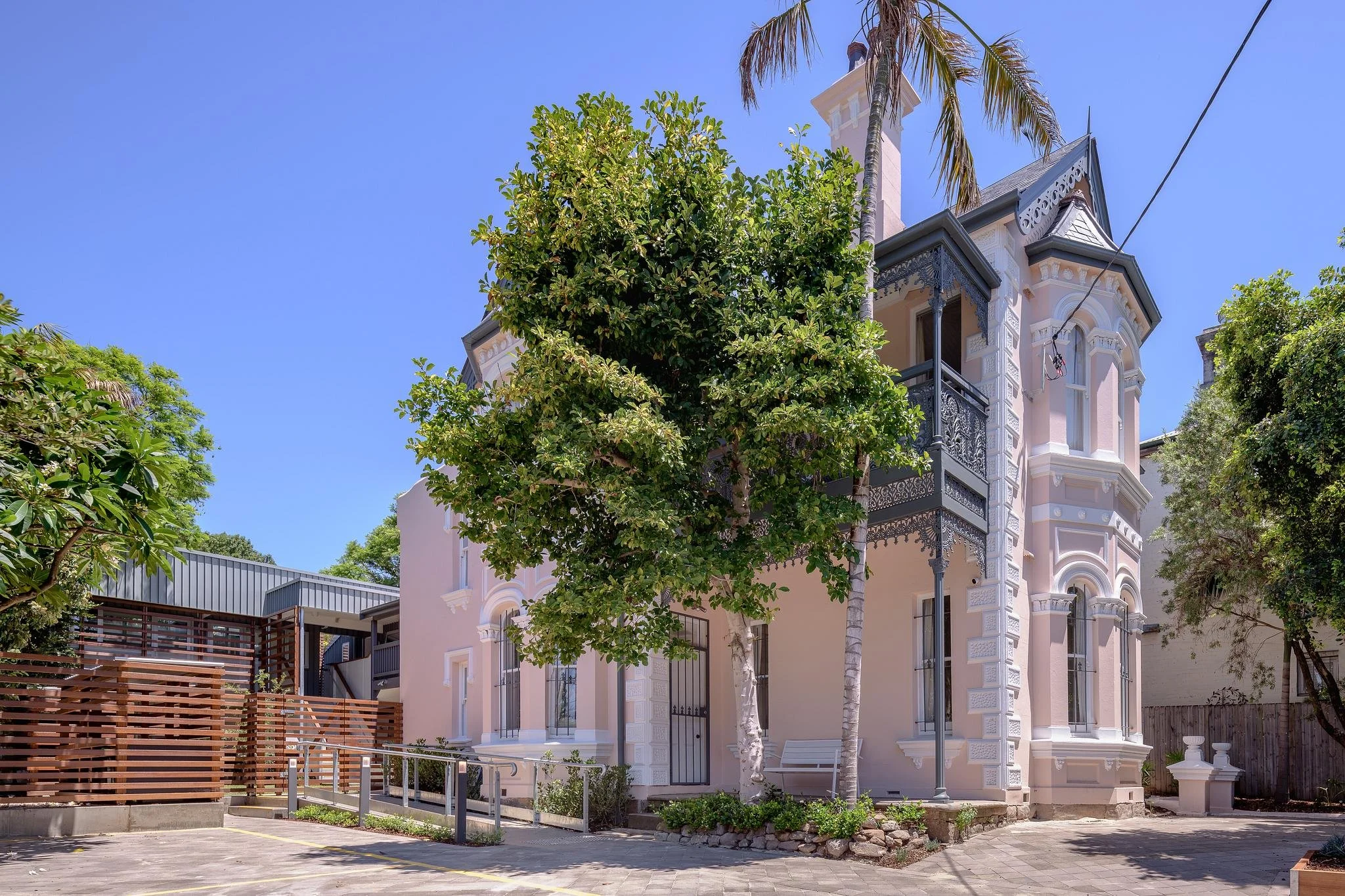
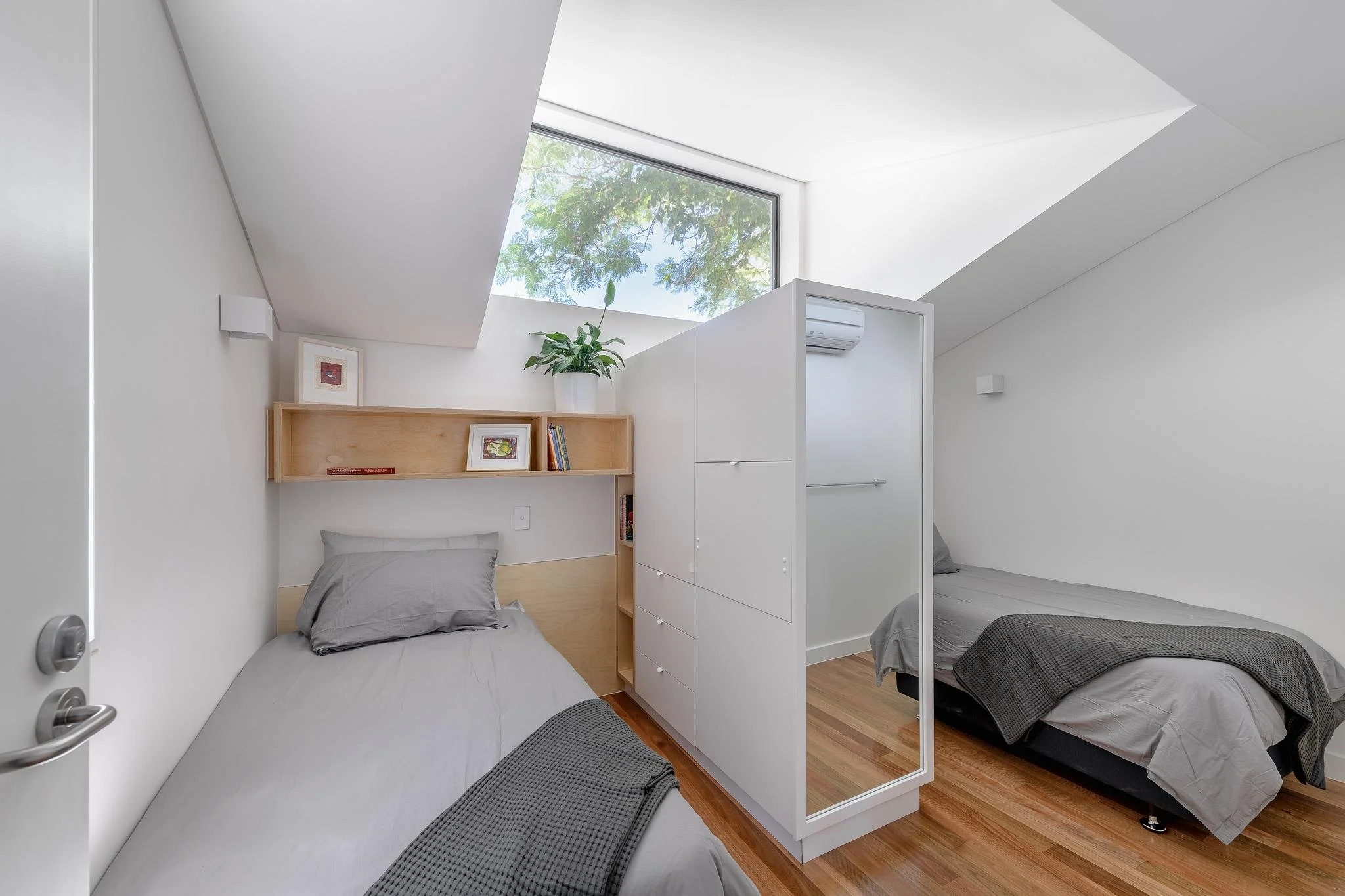
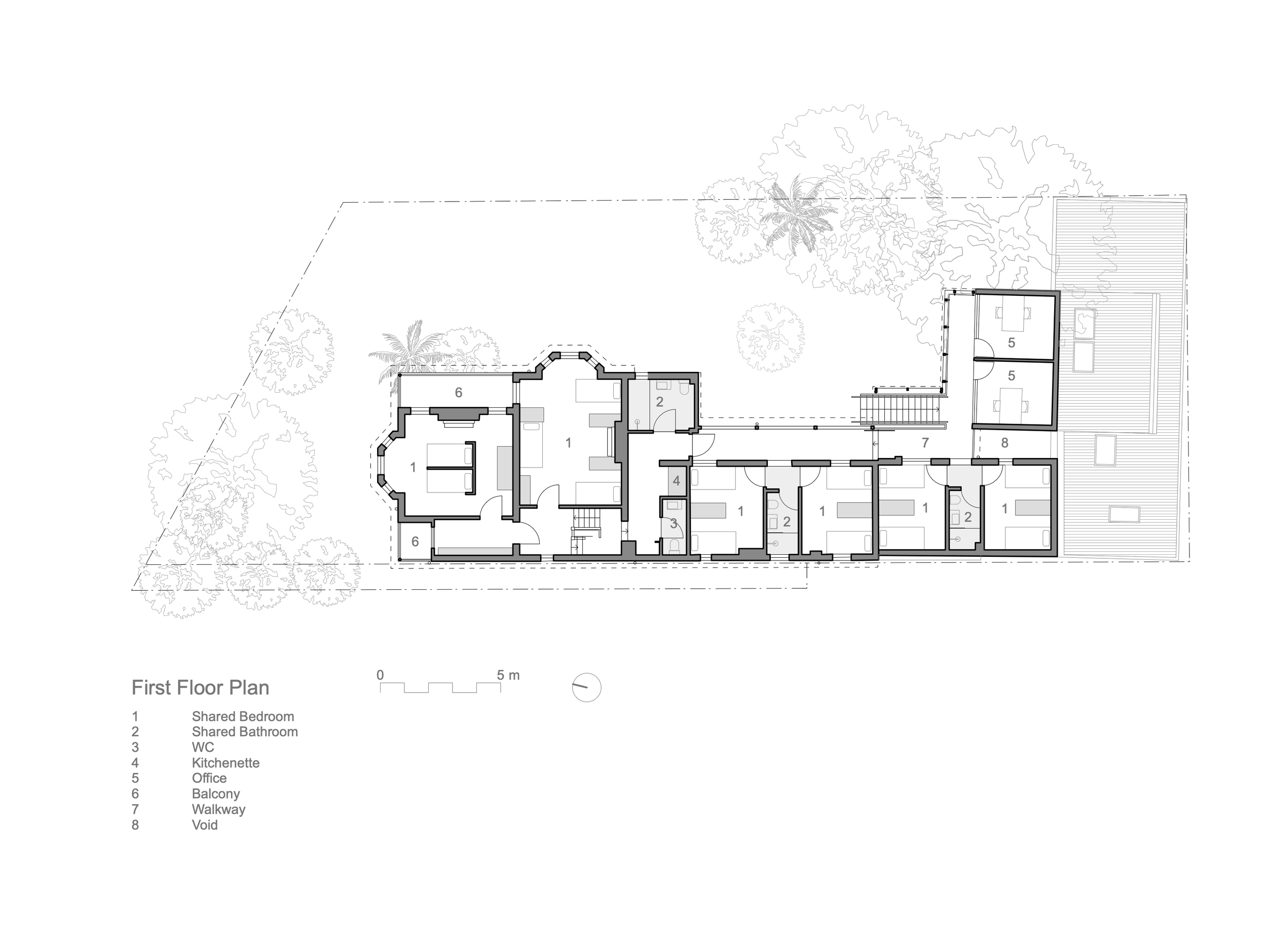
Completed in 2020, The Sydney Retreat is a not-for-profit residential facility for recovery from alcohol and drug dependency. Founded by a group of professionals with lived experience and deep understanding of addiction, the Retreat offers a non-clinical, mutual-help approach to recovery — fostering community, education, and reflection in a supportive environment.
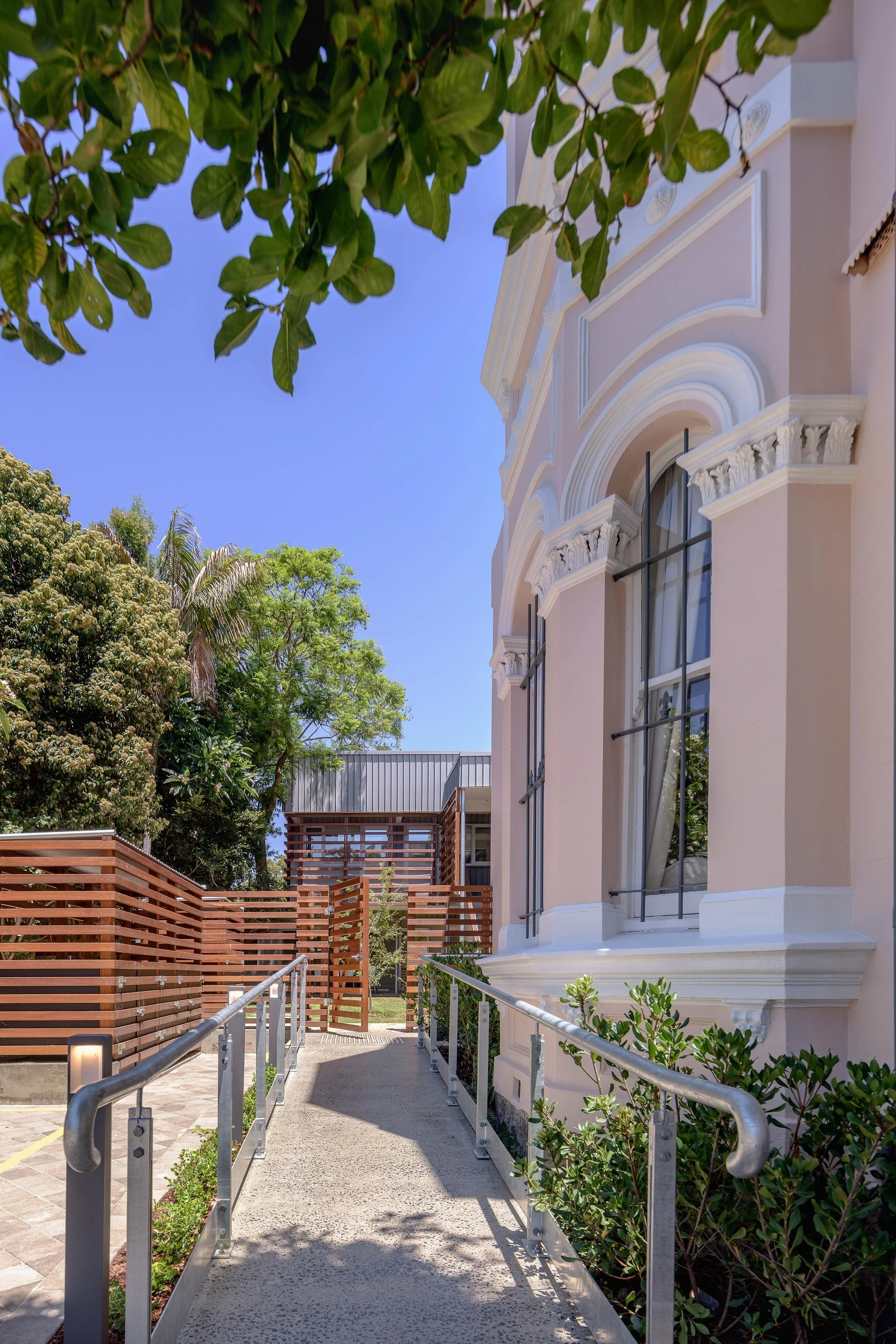
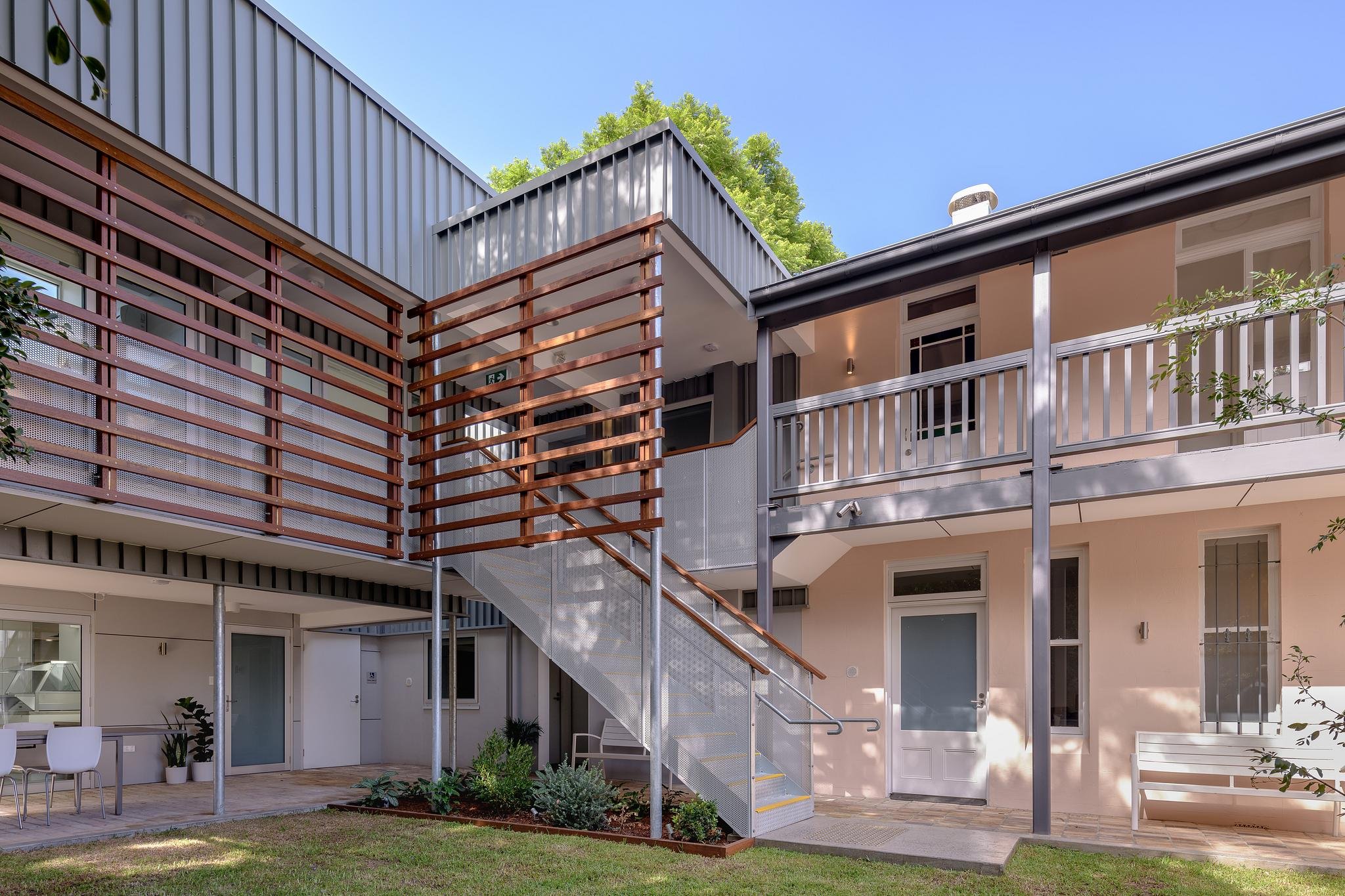
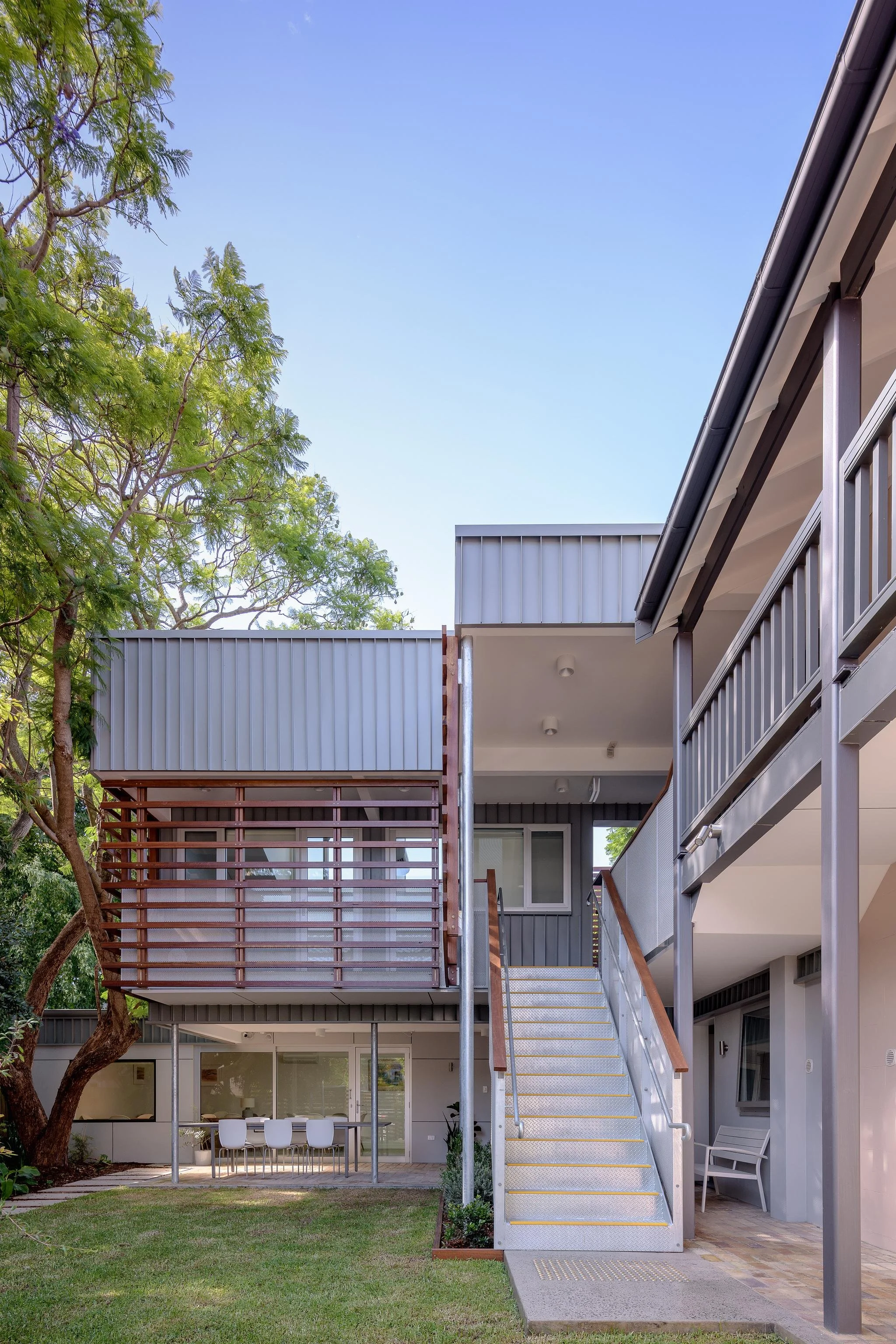
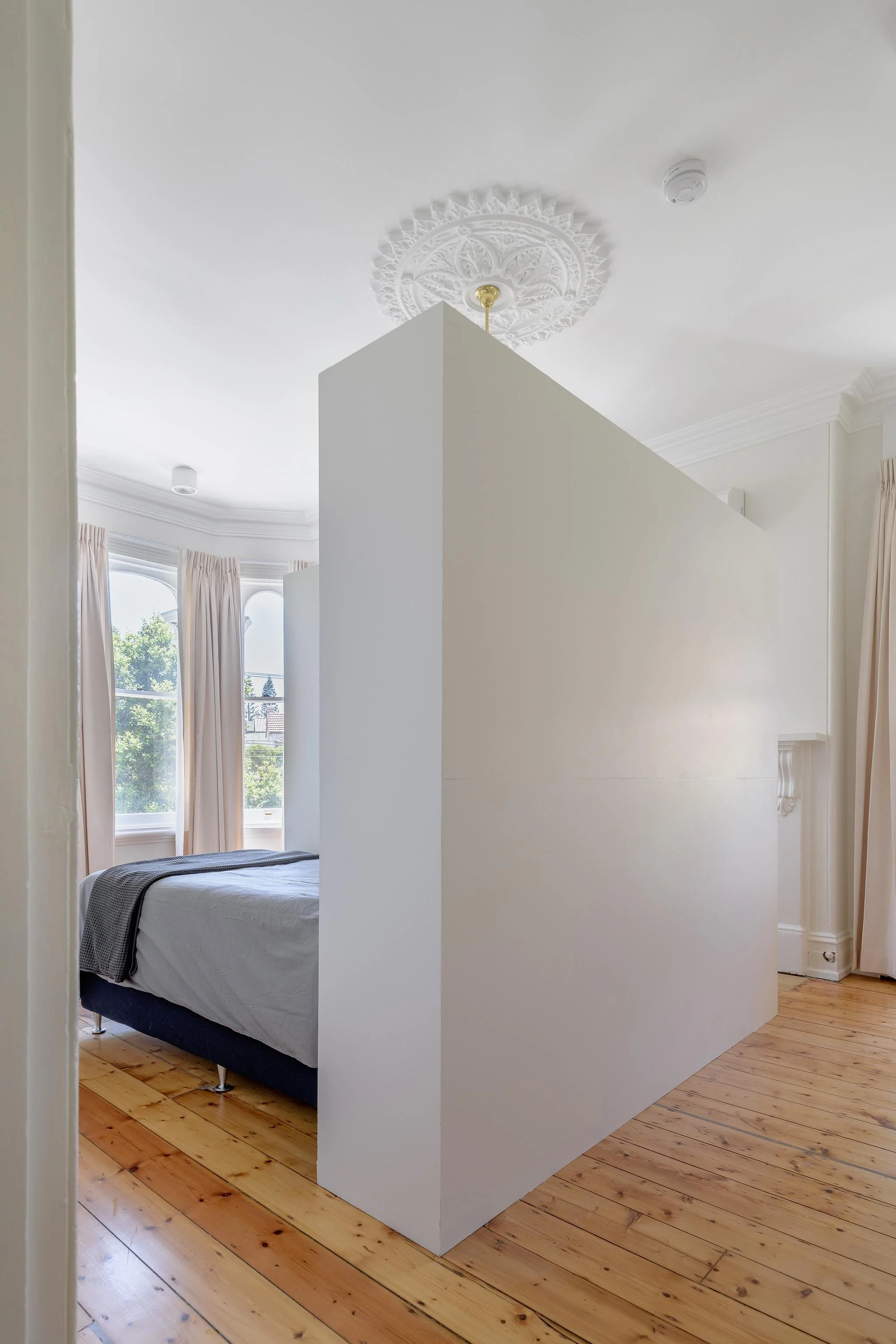
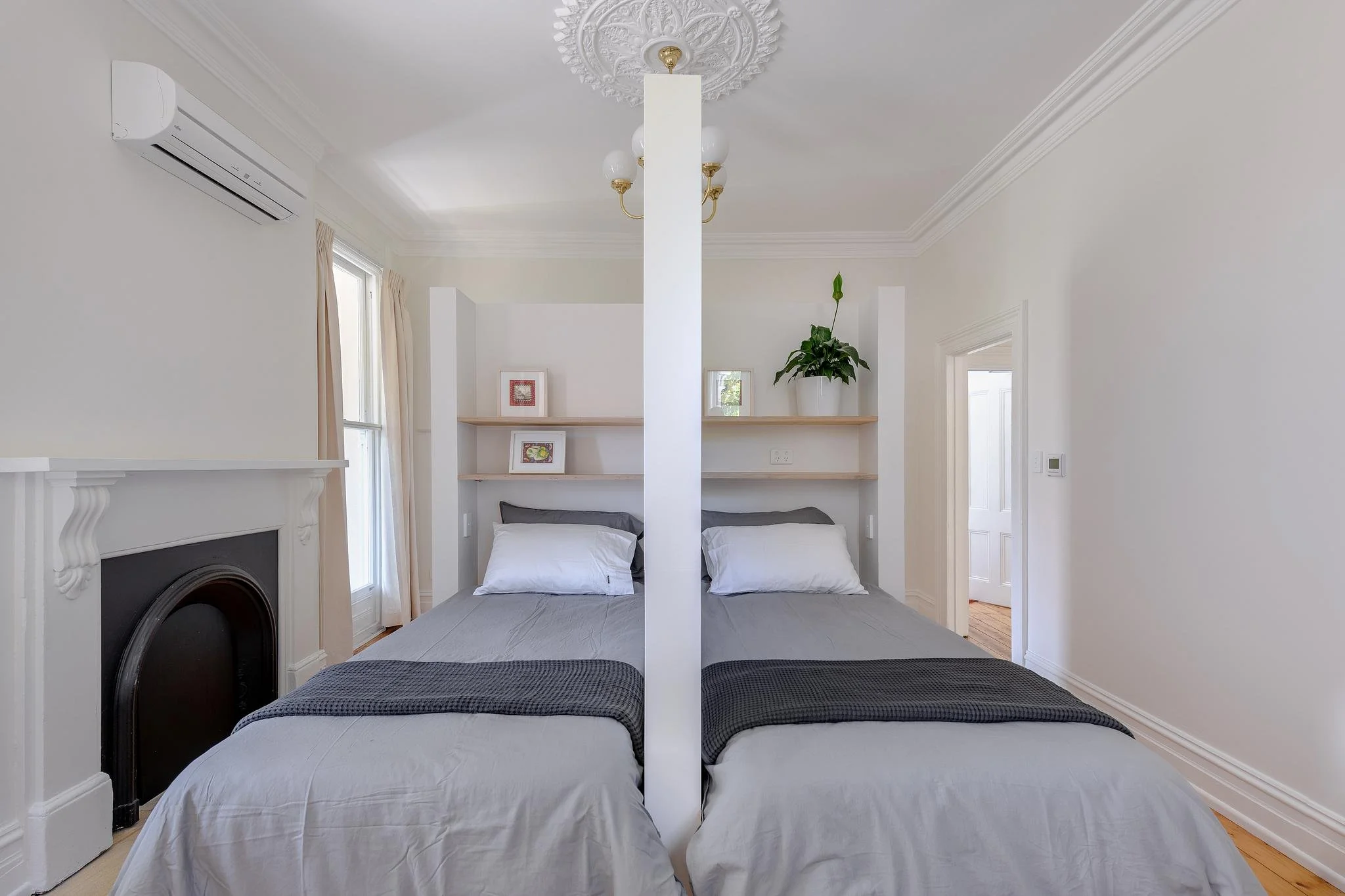
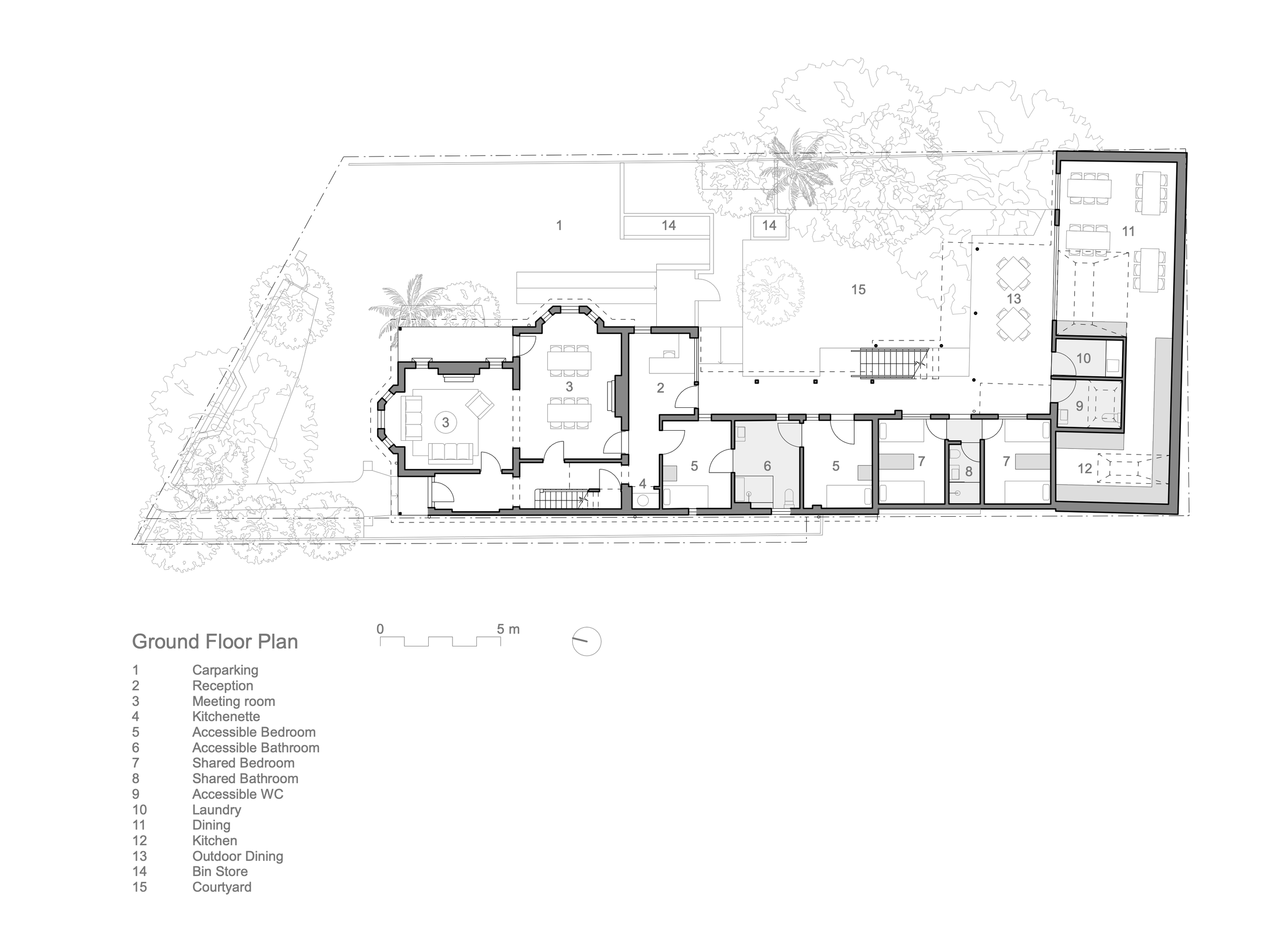
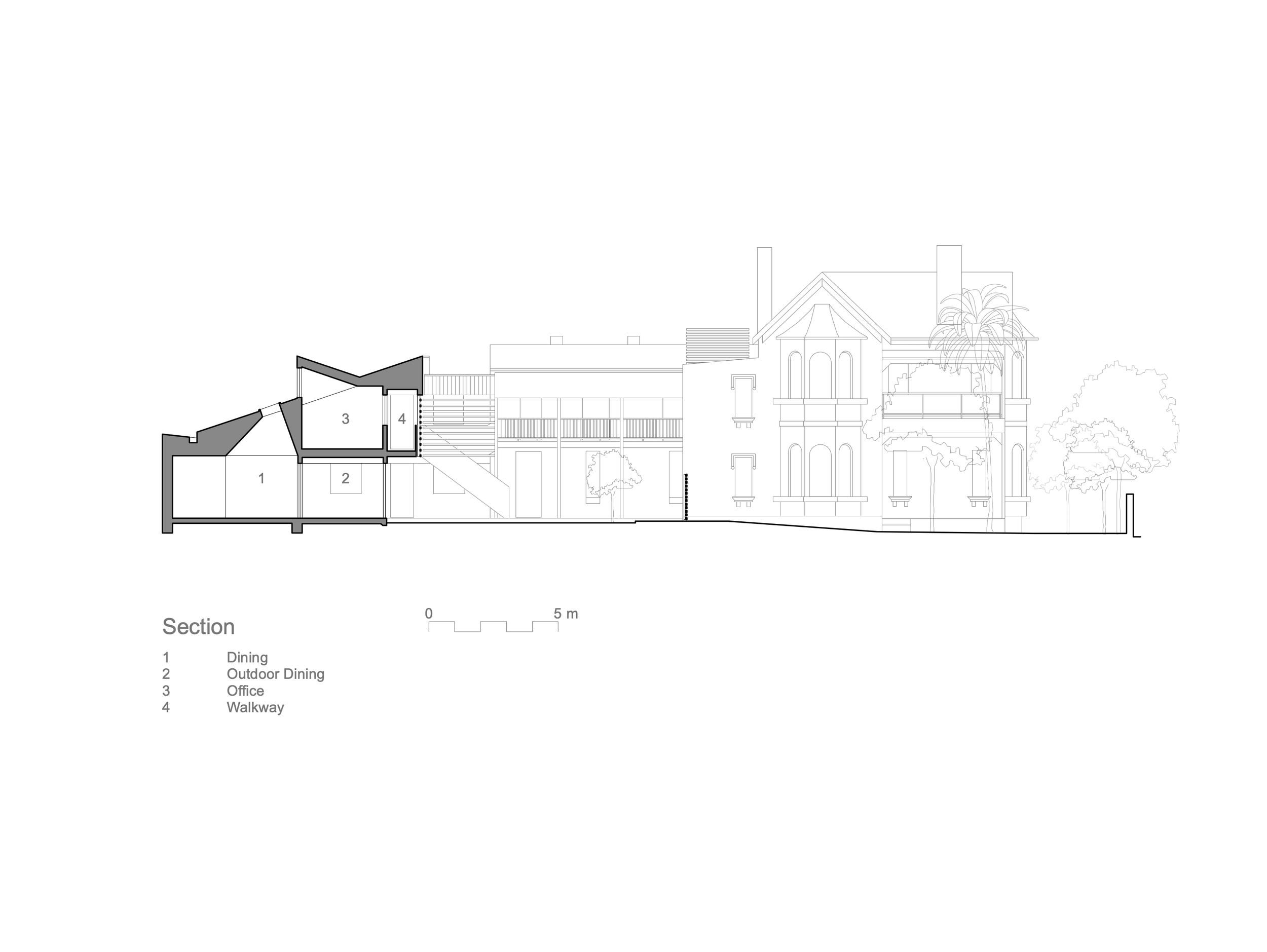
The project occupies one of four heritage-listed Victorian villas dating from the 1880s, along with a former workshop structure at the rear. The design sought to preserve and restore the original house, maintaining its gracious front rooms and adapting the altered rear wing with sensitivity and restraint. Later, unsympathetic additions were removed to reveal the building’s character and create opportunities for connection and light.
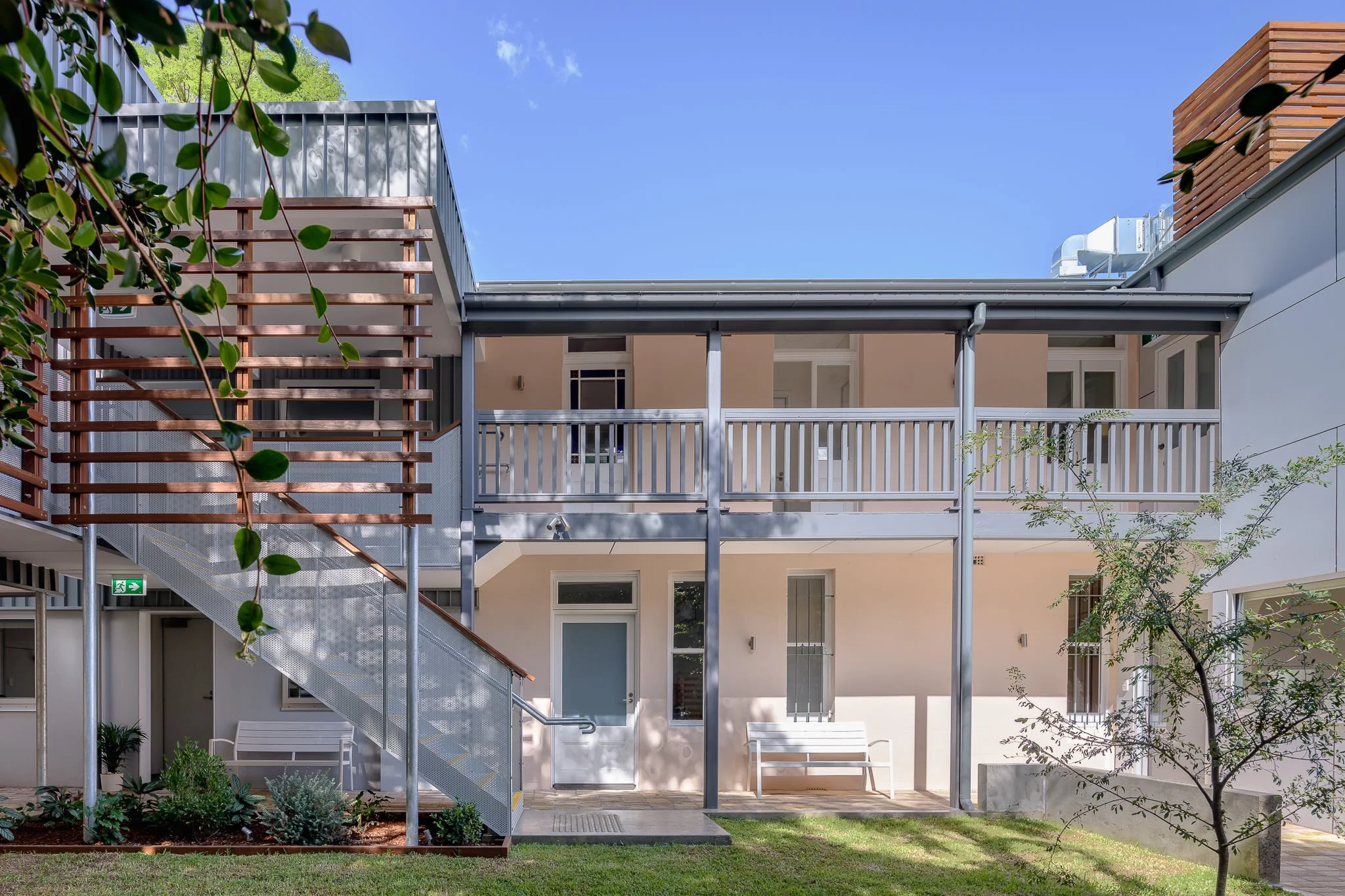
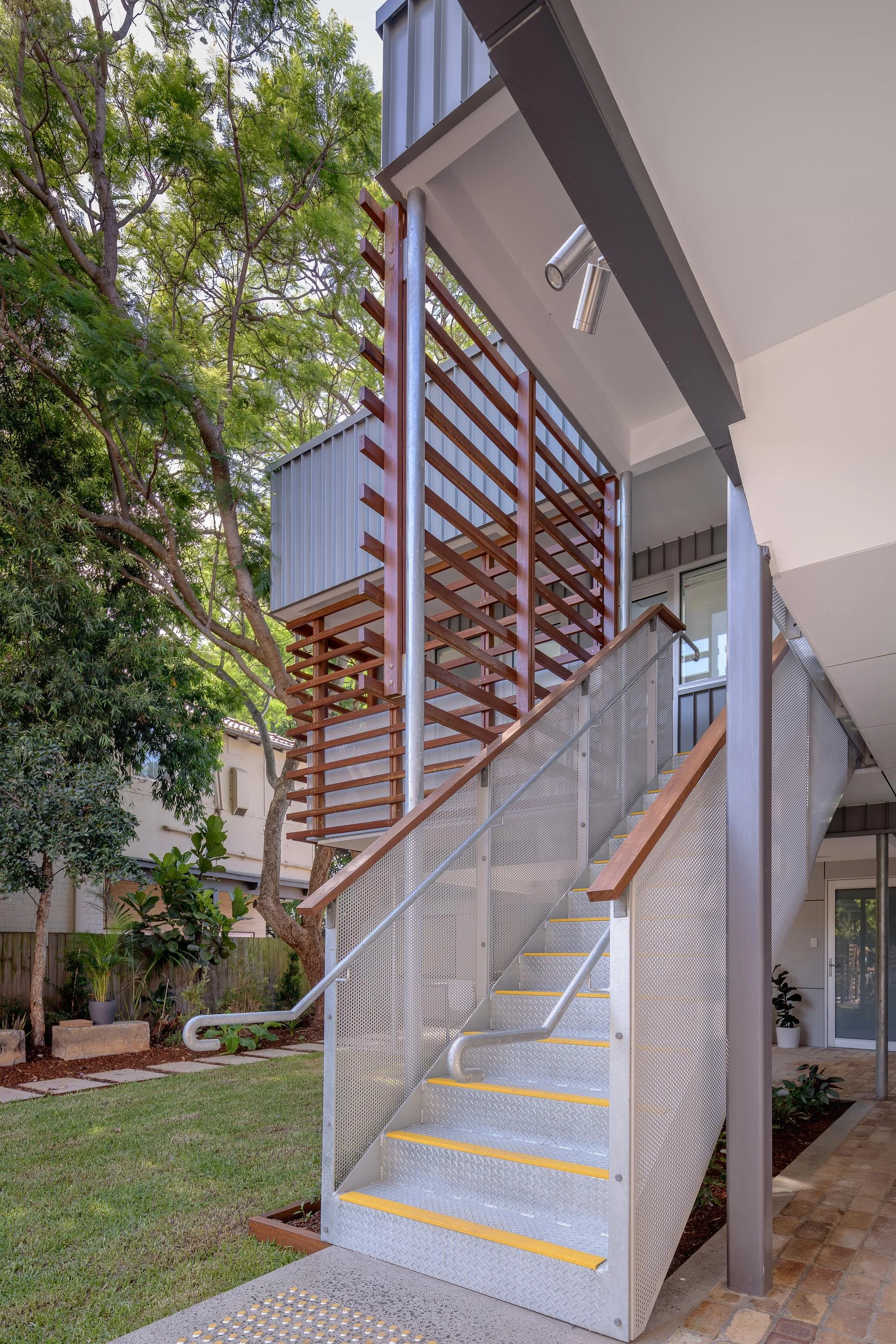
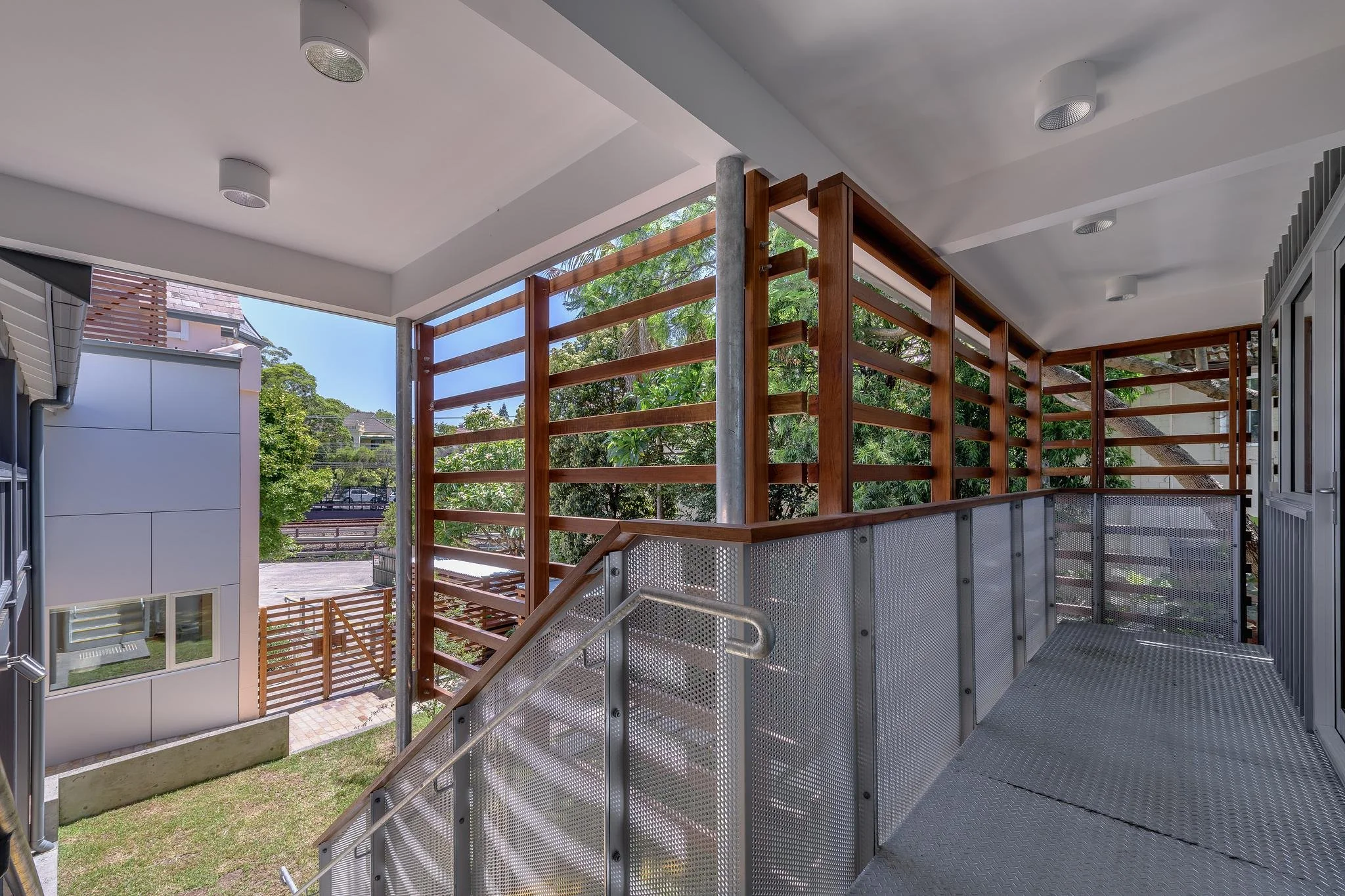
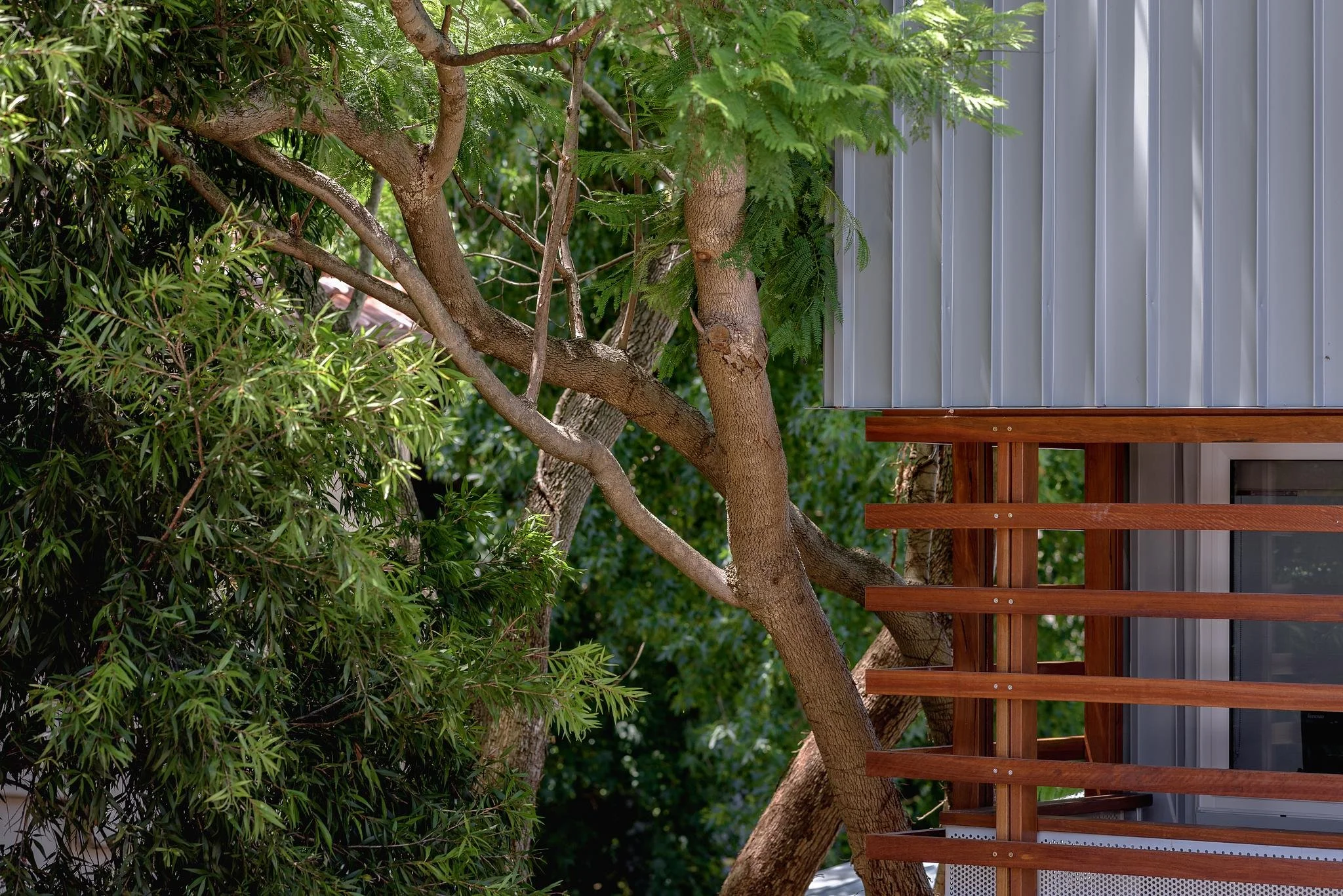
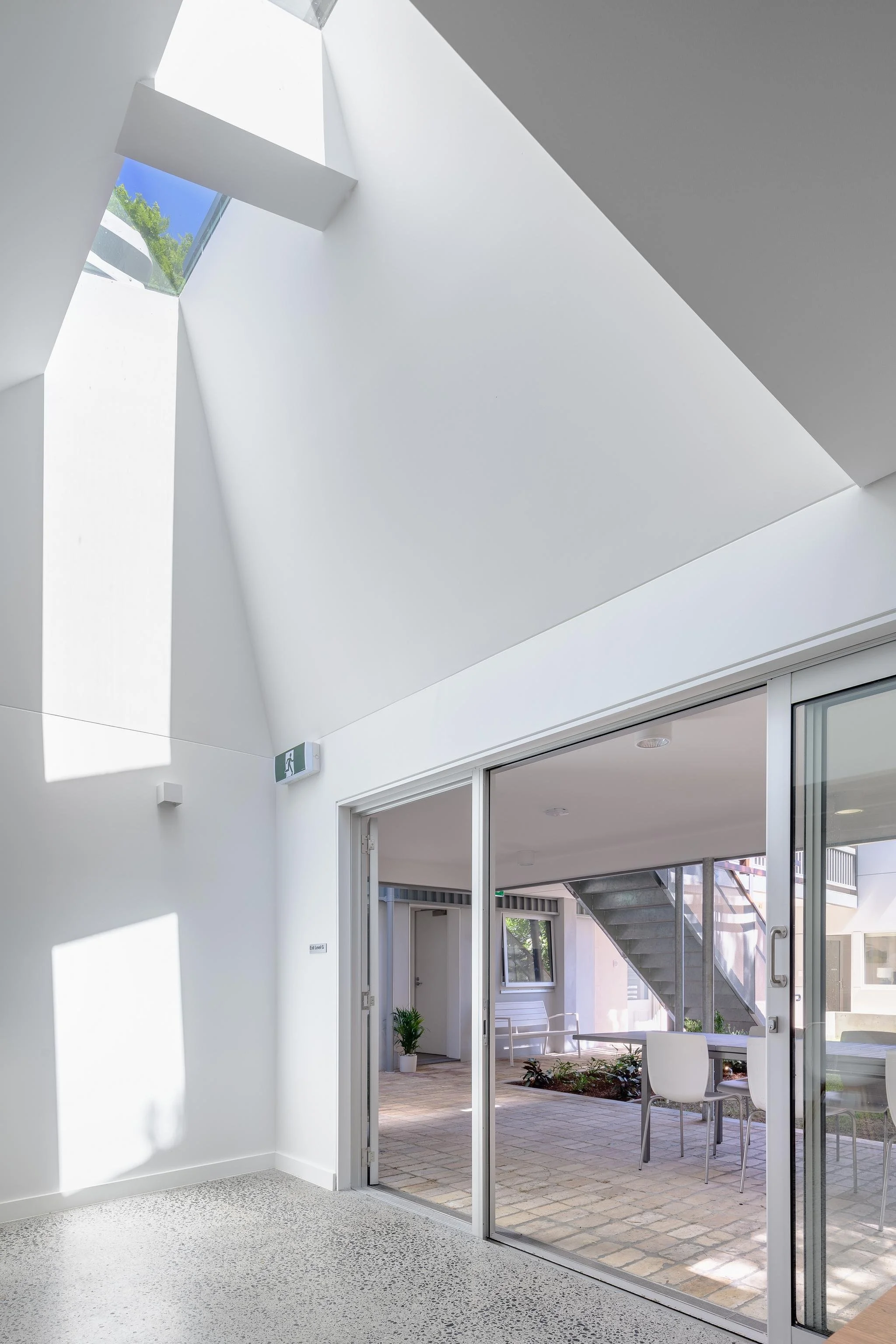
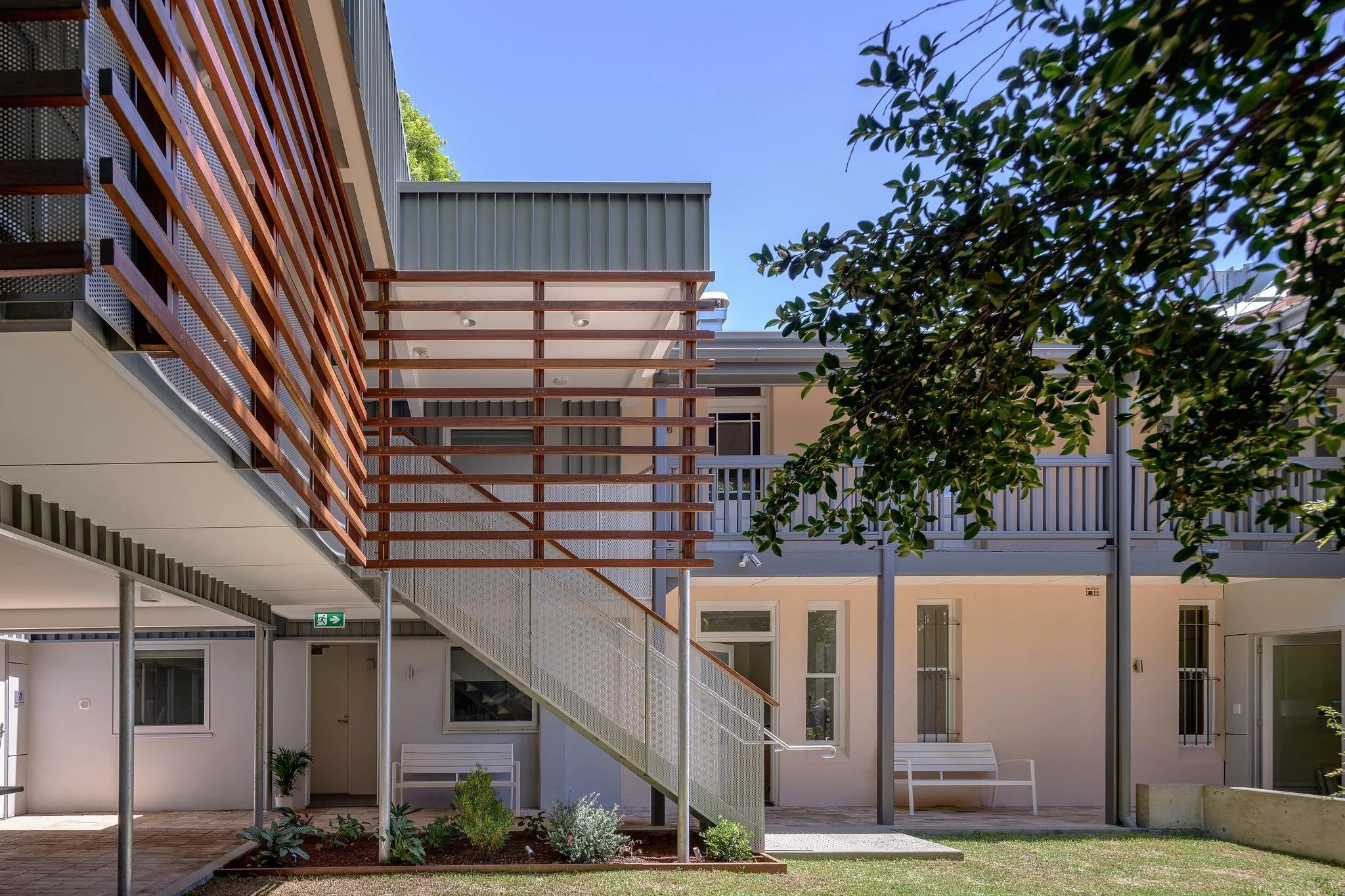
The existing masonry shell of the workshop was retained, and a contemporary two-storey addition was introduced within its footprint — distinct in form and material, yet respectful in scale and setting. Together, the heritage villa and new building frame a north-facing courtyard that serves as the social and spatial heart of the Retreat.
The result is a layered composition of old and new — a place of calm and dignity where architecture supports recovery through light, openness, and shared experience.
Photography by The Guthrie Project.