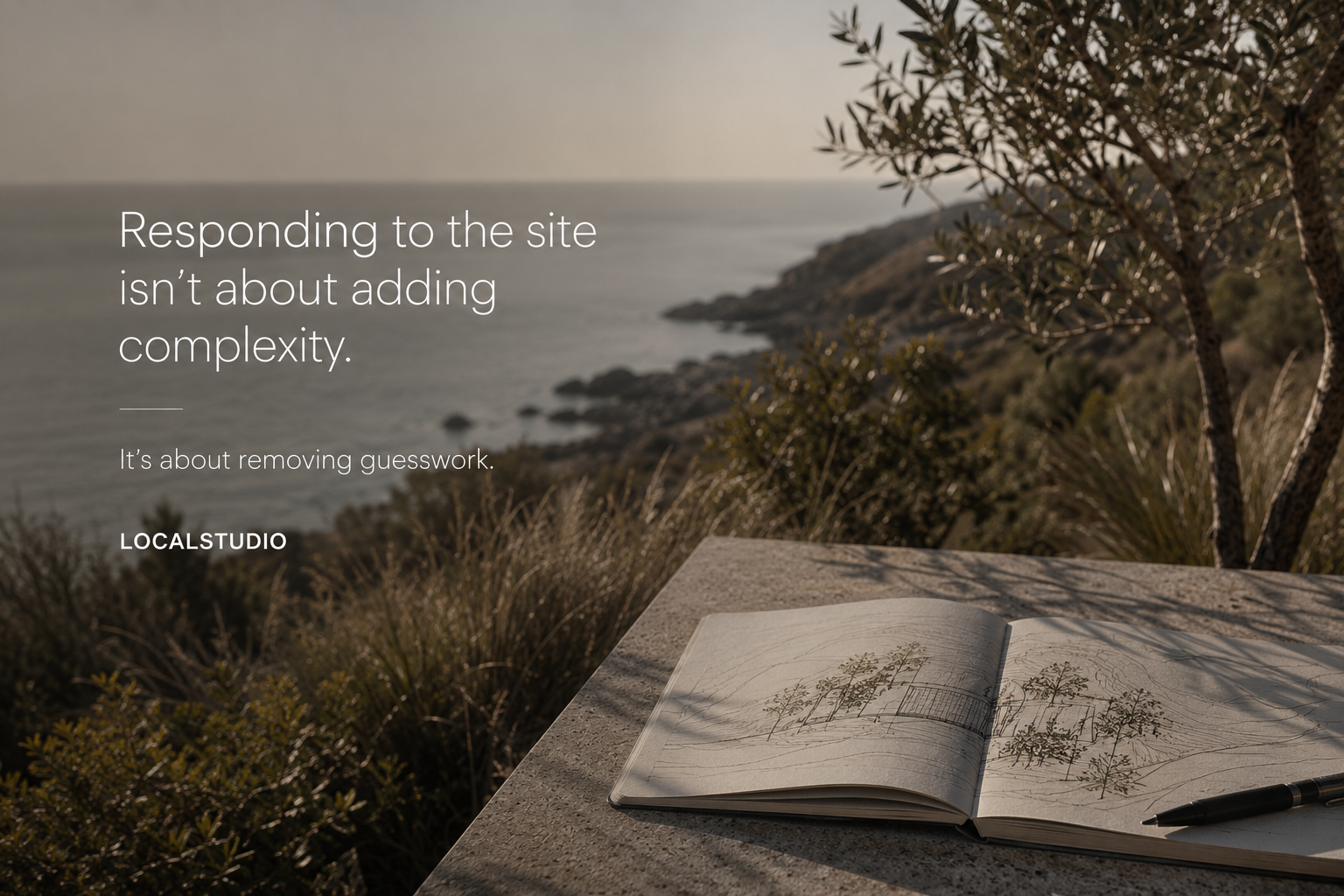
“Responding to the site” is a phrase that gets used a lot in architecture.
In reality, it’s often reduced to a gesture—something that sounds considered, but isn’t always followed through in a meaningful way.
A genuine response to site is quieter, and more deliberate.
It’s in the way light enters a room at different times of day.
How neighbouring buildings shape privacy and outlook.
Where level changes can be used, rather than concealed.
And how planning controls—often seen as constraints—can actually provide direction.
These factors aren’t obstacles to work around. They are the framework the project should grow from.
On many of our projects, the most important moves don’t come from a preconceived idea, but from paying close attention to what’s already there.
A living space shifts because of orientation.
An opening is adjusted because of a neighbouring condition.
A plan simplifies because the site suggests a clearer way forward.
Understanding the site isn’t about adding complexity.
It’s about removing guesswork.
At Local Studio, this process of understanding and discovery forms a critical part of the Concept Design stage.
With a clear understanding of the site and brief established, we begin testing ideas through sketches, diagrams, models, and reference imagery.
This stage is exploratory and iterative. Ideas are developed, reviewed, and refined to establish a clear and considered design direction.