Have you been thinking about renovating your home for a while? Perhaps you've outgrown the existing layout, the kitchen or bathroom needs updating, or your home simply isn't as comfortable or practical as it could be.
You might have a list of things you'd like to change but keep finding reasons to put the project off. Construction costs are high, the economy feels uncertain, finding a reliable builder seems difficult, or you're simply not sure where to start.
These are all understandable concerns. Renovating is a significant investment, and getting the timing right can be difficult.
However, waiting for the perfect time to renovate might mean waiting indefinitely. In the meantime, your needs continue to change, your home may become more expensive to maintain, and opportunities to improve the way you live can be missed.
Here are six reasons why it might be time to stop putting your renovation off and start exploring what's possible.
1. Your home isn't going to get any bigger, but your needs will change
Families grow, children become teenagers, people work from home and circumstances change. A house that worked perfectly well ten years ago might no longer suit the way you live today.
Perhaps there's nowhere quiet to work, the kitchen feels disconnected from the living spaces, or you simply don't have enough functional space.
Putting up with an unsuitable layout doesn't make these frustrations go away.
A well-considered renovation can help your home adapt to changing needs, often without significantly increasing its footprint. Sometimes it's about rethinking how rooms connect, improving circulation, introducing more natural light or making better use of underutilised spaces.
The longer you wait, the longer you spend living with a home that doesn't quite work for you.
2. Waiting for construction costs to come down might not be the answer
One of the most common reasons people delay renovating is the expectation that construction costs will eventually fall.
While the building industry experiences fluctuations, there's no guarantee that waiting another year or two will make your renovation significantly more affordable.
Labour, materials, professional fees, regulatory requirements and builder availability all influence the overall cost of a project. Even if some construction costs stabilise, other expenses may continue to increase.
As I discussed in my recent article, Three things home renovators need to know about building in 2026, the key is to budget for uncertainty, understand where to invest and be realistic about what you can afford.
Rather than waiting for the market to become more predictable, start by establishing a realistic budget and understanding what can be achieved within it.
A smaller, carefully considered renovation may deliver considerably more value than a larger project that stretches your finances.
3. Good renovations take time to plan
One thing that often surprises homeowners is how long it takes to get a renovation ready for construction.
Developing a brief, understanding the existing building, exploring design options, establishing a budget, coordinating consultants and obtaining the necessary approvals all take time.
Depending on the complexity of your project, the design and approval process alone can take several months.
Starting the conversation with an architect early gives you time to explore the possibilities, understand the constraints and make informed decisions before committing to construction.
It also provides an opportunity to investigate approval pathways, consider alternative design solutions and obtain more reliable construction cost estimates.
If you're thinking about renovating in the next 12–24 months, now could be a good time to start planning.
4. You're missing the opportunity to make your home more comfortable and efficient
Many older homes were built to different expectations around thermal comfort and energy efficiency.
Poor insulation, inadequate shading, draughts, inefficient windows and limited natural ventilation can make homes uncomfortable throughout the year and expensive to run.
A renovation provides an opportunity to address these issues rather than simply improve the appearance of your home.
Better insulation, appropriate glazing, external shading and natural ventilation can improve comfort and reduce energy consumption. You might also investigate solar panels, battery storage, heat-pump hot water and more efficient heating and cooling.
At our own St Peters House, we've gradually improved the performance of our existing Federation home through a combination of passive design, insulation, shading, solar and battery storage.
You don't have to do everything at once. Improvements can be planned and implemented in stages, allowing you to make progress over time.
The sooner you start thinking about these opportunities, the sooner you can begin benefiting from a more comfortable and efficient home.
5. Delaying necessary maintenance can make things more expensive
Not every renovation starts with a desire for more space or a new kitchen. Sometimes the existing building simply needs attention.
Roofing, drainage, waterproofing, windows, plumbing and electrical services all have a finite lifespan. Small maintenance issues can become more significant problems if left unattended.
A renovation provides an opportunity to address these issues as part of a coordinated approach rather than dealing with individual problems as they arise.
It can also help you prioritise essential work, identify what can be retained and determine where improvements will have the greatest benefit.
Not every maintenance issue requires a major renovation, but understanding the condition of your home and planning for necessary upgrades can help avoid unnecessary expense and disruption further down the track.
6. You don't need to do everything at once
Perhaps the biggest misconception about renovating is that it needs to be an all-or-nothing exercise.
People often imagine a substantial extension, a complete internal refurbishment and a large construction budget. When the numbers become overwhelming, the project gets put on hold.
But good design isn't necessarily about building more.
Sometimes the best solution is to retain existing spaces, improve the layout, make rooms more flexible or undertake a series of smaller, coordinated improvements over time.
At St Peters House, our own renovation involved adding only around 20 square metres. By rethinking the existing layout, improving connections between living spaces and making better use of the available footprint, we significantly improved the way the house worked for our family.
The backyard studio also provides a separate workspace without taking additional space from the house itself.
It's a good example of why understanding what you actually need, rather than simply adding more, can lead to better outcomes.
You can also plan a renovation in stages, prioritising the most important work now while allowing for future improvements when circumstances and budgets permit.
So, where do you start?
Putting off a renovation until the economy improves, construction costs fall or you have complete certainty about what you want to do might seem sensible.
But you don't need to commit to building tomorrow to make progress today.
The first step is understanding your existing home, identifying what's not working and exploring what's realistically possible within your budget.
At Local Studio, we encourage clients to start with a conversation before jumping into design solutions. An initial consultation provides an opportunity to discuss your ideas, consider the possibilities, understand potential approval pathways and establish an indicative budget.
Sometimes that conversation confirms that a renovation is worth pursuing. Other times, it identifies a more modest or staged approach that makes better sense.
Either way, you'll be in a much better position to make an informed decision.
Your home doesn't have to be perfect, and your renovation doesn't have to happen all at once. But if you've been thinking about making it work better, perhaps it's time to stop putting it off and start exploring what's possible.
Thinking about renovating?
Book a consultation today to discuss your project and find out where to start.
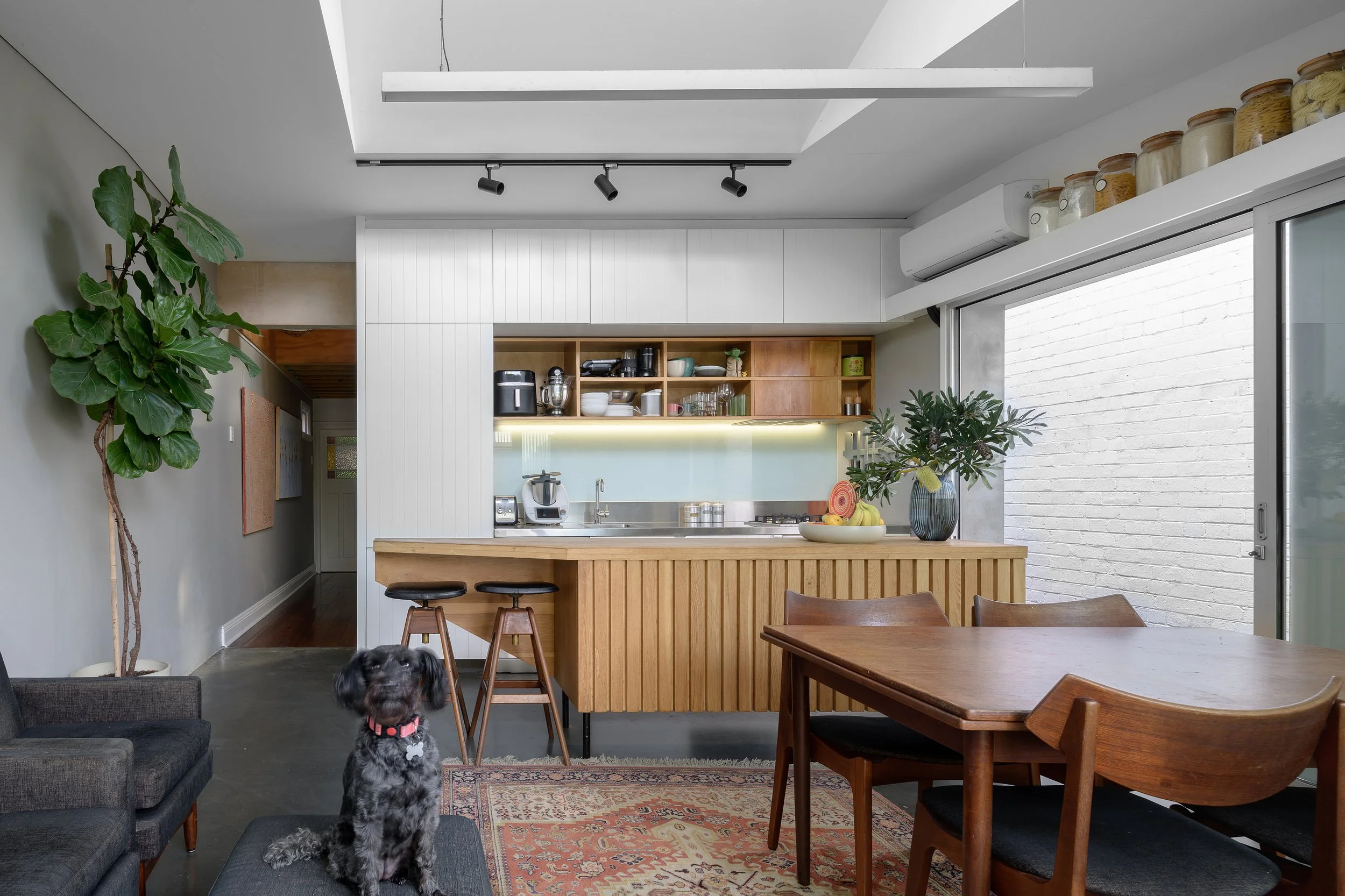
St Peters House | Photography by The Guthrie Project